Contents
Best Espresso Grinders for Home Use (2026)
TL;DR: The best espresso grinder for home use depends on your budget and workflow, but the Eureka Mignon Specialita hits the sweet spot for most home baristas — precise stepless grind adjustment, low retention, and a quiet motor under $350. Serious enthusiasts should look at the Niche Zero or DF64 Gen 2. Budget-first? The Baratza Sette 270 still delivers.
Why Grinder Choice Matters More Than Your Espresso Machine
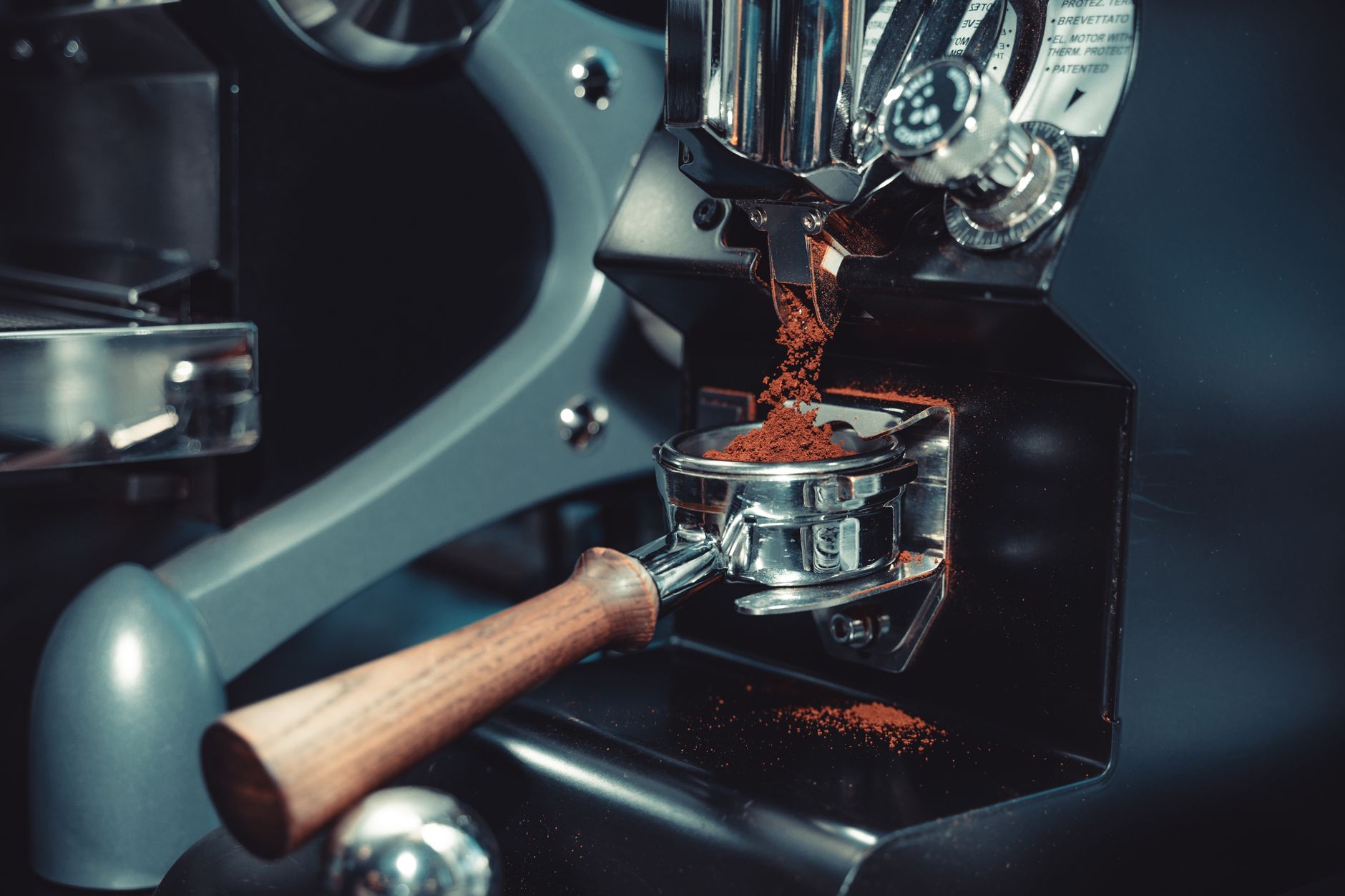
The grinder is the most consequential piece of espresso equipment you own. A mediocre machine with an excellent grinder outperforms the reverse — every single time. Espresso demands particle consistency within microns; blade grinders and cheap burr grinders produce a bimodal distribution that no machine can extract cleanly.
 Photo: More Amore via Pexels
Espresso operates in a narrow window: 9 bars of pressure, 90–96°C water, 25–30 seconds extraction. Inconsistent grind size means some particles over-extract (bitter, astringent) while others under-extract (sour, watery) — simultaneously. The result isn’t just suboptimal espresso; it’s espresso that can’t be dialed in at all.
What separates an espresso-capable grinder from a general coffee grinder:
- Stepless or micro-stepped adjustment — espresso requires finer resolution than macro steps provide
- Low retention — grounds sitting in the burr chamber from the previous dose contaminate the next shot
- Consistent particle distribution — flat burrs and conical burrs each have trade-offs, but both beat disc grinders
The Best Espresso Grinders for Home: Our Top Picks
Six grinders dominate the home espresso space in 2026. Each earns its place at a specific price point and use case — there’s no universal winner, but there is a right answer for your setup.
 Photo: FOX ^.ᆽ.^= ∫ via Pexels
| Machine | Price | Burr Type | Burr Size | Adjustment | Retention | Best For |
|---|---|---|---|---|---|---|
| Niche Zero | ~$750 | Conical | 63mm | Stepless | <0.1g | Espresso purist, single dosing |
| Eureka Mignon Specialita | ~$335 | Flat | 55mm | Stepless | ~0.5g | Daily driver, versatility |
| DF64 Gen 2 | ~$280 | Flat | 64mm | Stepless | <0.2g | Performance/price ratio |
| Baratza Sette 270 | ~$380 | Conical | 40mm | Stepped (270 micro) | ~0.3g | Convenience, speed |
| Timemore Sculptor 064 | ~$260 | Flat | 64mm | Stepless | <0.3g | Budget flat-burr |
| Weber Key | ~$600 | Flat | 83mm | Stepless | <0.1g | Competing-level home setup |
Niche Zero — Best Single Dose Espresso Grinder
Single-dose, conical, nearly zero retention — the Niche Zero turned the home espresso world when it launched and still benchmarks the category. The 63mm conical burrs produce a sweet, body-forward cup. It’s slower to grind than flat-burr alternatives, but what arrives in your portafilter is exactly what you put in the hopper.
 Photo: Mike C via Pexels
Specs:
| Spec | Detail |
|---|---|
| Boiler type | N/A |
| Portafilter size | N/A |
| PID | N/A |
| Burr type | 63mm conical |
| Adjustment | Stepless |
| Retention | <0.1g |
| RPM | 100 RPM |
| Dimensions | 17.5 × 15.5 × 36cm |
Verdict by archetype:
- Espresso purist: Yes — the low RPM, low retention, and conical profile produce exceptional body and sweetness in the cup
- Milk drinker: Works, but you’re paying for nuance that gets buried in milk
- Convenience-first: Slower grind speed (about 15–20 seconds for a double) and single dosing requires weighing each dose — adds steps
The one real criticism: the Niche grinds slowly. At 100 RPM that’s by design — low heat, preserved volatiles — but if you’re pulling four shots before work, it matters.
Eureka Mignon Specialita — Best All-Around Home Espresso Grinder
The Specialita is the grinder we recommend most often to people stepping up from superautomatic or entry-level setups. Stepless adjustment, a built-in timer, quiet motor (< 60dB), and a real 55mm flat burr at $335 — there’s nothing in this price range that competes on the full package.
The ACE burr set produces a slightly sharper, cleaner cup than conical alternatives at similar price points. Retention sits around 0.5g — not Niche Zero-level, but acceptable and consistent once you’ve dialed in a purge dose.
Verdict by archetype:
- Espresso purist: Strong choice — the stepless adjustment gives you genuine dialing flexibility
- Milk drinker: Excellent — the brightness of the flat burr cuts through milk beautifully
- Convenience-first: Best in class here — timer dosing means no scale needed for daily use
DF64 Gen 2 — Best Budget Flat Burr Espresso Grinder
At $280, the DF64 Gen 2 uses 64mm flat burrs — the same diameter as grinders costing twice as much. The second-generation update fixed the grind alignment issues that plagued the original. Retention under 0.2g with single dosing makes it genuinely competitive with grinders at $500+.
 Photo: Jonathan Humphries via Pexels
The trade-off: build quality reflects the price. The plastic components feel like what they are, and the workflow requires a declumper or light RDT (Ross Droplet Technique) to prevent static clumping. Neither is a dealbreaker — both are 10-second habits.
Verdict by archetype:
- Espresso purist: Excellent value play — the burrs genuinely perform
- Milk drinker: Good
- Convenience-first: Static clumping adds a friction point; the Specialita’s timer workflow is cleaner
Baratza Sette 270 — Best for Workflow Speed
The Sette grinds directly into the portafilter, bypasses the mess of a catch cup entirely, and does it fast. The macro/micro stepped system gives 270 grind settings — more than enough resolution for espresso. If speed and workflow simplicity matter most, nothing in this range touches it.
The conical burr geometry produces a slightly less transparent cup than flat alternatives, but “less transparent” means “more forgiving” — errors in technique read less harshly. For households where espresso is one of several morning drinks and dialing in isn’t a ritual, that’s a feature.
Verdict by archetype:
- Espresso purist: Adequate — but the stepped adjustment and conical burrs leave something on the table
- Milk drinker: Strong match — speed + forgiving extraction profile
- Convenience-first: The clearest recommendation in this segment
Timemore Sculptor 064 — Best Value Entry into 64mm Flat Burrs
Timemore took the flat-burr, single-dose formula and delivered it at $260. The Sculptor 064 produces a bright, defined extraction with strong texture. For someone who wants proper flat-burr performance without spending DF64/Specialita money, this is the current best-value pick.
 Photo: David Bares via Pexels
Build quality is solid for the price — better than the DF64 in tactile feel, though the burr chamber access is slightly less convenient for cleaning.
How to Choose: The Decision Framework
Your primary decision variable isn’t price — it’s workflow preference. Single dosing or hopper? Timer or scale? How many shots per day?
Single dosing (weighing beans for each shot): Niche Zero, DF64 Gen 2, Timemore Sculptor 064 Hopper-friendly (refill weekly, dose by timer): Eureka Mignon Specialita, Baratza Sette 270
Volume:
- 1–2 shots/day: Any of the above. Don’t over-invest.
- 3–6 shots/day: The Specialita’s durability and workflow smooth out the high-volume friction
- 6+ shots/day (small household or office): Consider the Weber Key or commercial-lite options
Budget ladder:
- Under $300 → DF64 Gen 2 or Timemore Sculptor 064
- $300–$400 → Eureka Mignon Specialita (clear winner at this band)
- $400–$600 → Niche Zero used market, or stretch to new
- $600+ → Niche Zero new, Weber Key
What to Look for in an Espresso Grinder
Burr Size and Type
Larger burrs run at lower RPM to achieve the same throughput — less heat, less oxidation. 64mm+ flat or 60mm+ conical is the practical floor for serious home espresso. Below that you’re making trade-offs you’ll feel in the cup.
Flat burrs: brighter, more defined, slightly less forgiving on technique. Conical burrs: more body, sweeter, more forgiving.
Stepless vs Stepped Adjustment
Espresso requires adjustment resolution of roughly 10–50 microns between grind settings. Macro stepped grinders (under 40 settings) don’t provide this. The Baratza Sette’s 270 micro-steps are the minimum acceptable floor for consistent dialing. Stepless is better.
Retention
Every gram sitting in the grind path from your last dose contaminates this dose. For single-origin, high-transparency espresso, retention above 1g is a serious problem. For daily espresso from a consistent blend, 0.5g is acceptable if the purge routine is consistent.
→ See also:
- The Complete Coffee Grinder Guide (2026)
- Burr vs Blade Grinder: Why It Matters for Your Coffee
- Best Coffee Grinders Under $100 (2026)
FAQ
Do I really need a dedicated espresso grinder, or can I use a regular burr grinder? Most “regular” burr grinders don’t have sufficient grind resolution for espresso — you’ll find yourself between settings, unable to dial in. If a grinder doesn’t have stepless adjustment or at minimum 200+ micro-stepped settings, it’s not reliable for espresso. The Baratza Encore, for example, is an excellent drip grinder and a poor espresso grinder.
Is the Niche Zero worth the $750 price tag? For a single-origin espresso enthusiast who wants to taste every nuance and is willing to single-dose, yes. For someone who drinks flat whites daily and isn’t chasing transparency, the Specialita at $335 does 90% of the job. The Niche Zero’s retention spec (under 0.1g) is genuinely special, but most home setups won’t reveal that difference.
How often should I clean my espresso grinder? Burrs should be brushed out weekly if you’re pulling daily shots. Full disassembly and burr cleaning every 2–3 months prevents rancid oil buildup, which is more damaging to cup quality than burr wear. Grindz tablets are adequate for the chamber; use them monthly.
What’s RDT and should I use it? RDT (Ross Droplet Technique) means adding a drop or two of water to your beans before grinding to reduce static and clumping. It works, takes two seconds, and is especially useful with the DF64 and Timemore. There’s no measurable impact on extraction quality.
Can I use an espresso grinder for other brew methods? Yes, with caveats. Grinders like the Specialita and Niche Zero cover espresso through filter. The Baratza Sette grinds coarser than espresso but the stepped system gets coarser than needed for pour-over less elegantly than a grinder designed for both. If you brew multiple methods, the Niche Zero or Specialita handle the full range better than the Sette.
Does a more expensive grinder pull better espresso than a cheap machine? Equipment quality interacts — a $750 Niche Zero paired with a $200 Gaggia Classic Pro will outperform a $2,000 machine paired with a blade grinder. Grinder-first is the correct upgrade path, and most barista advice reflects this.
Editorial methodology: Assessments are based on manufacturer specifications, published user reviews, and editorial research. Physical hands-on testing is noted explicitly where it occurred. Rankings reflect our editorial judgment and are not influenced by affiliate commission rates. Full editorial policy · Affiliate disclosure