Contents
Best Espresso Machines for Home Use (2026)
TL;DR: The best home espresso machine depends on your budget and skill level. The Breville Barista Express is the top all-rounder with a built-in grinder; the Gaggia Classic Pro is the best under $500 for espresso purists; the De’Longhi Dedica is the pick for small kitchens. All three pull genuine espresso — 9 bar, 90–96°C, 25–30 seconds.
Which Home Espresso Machine Is Actually Best?
**The Breville Barista Express
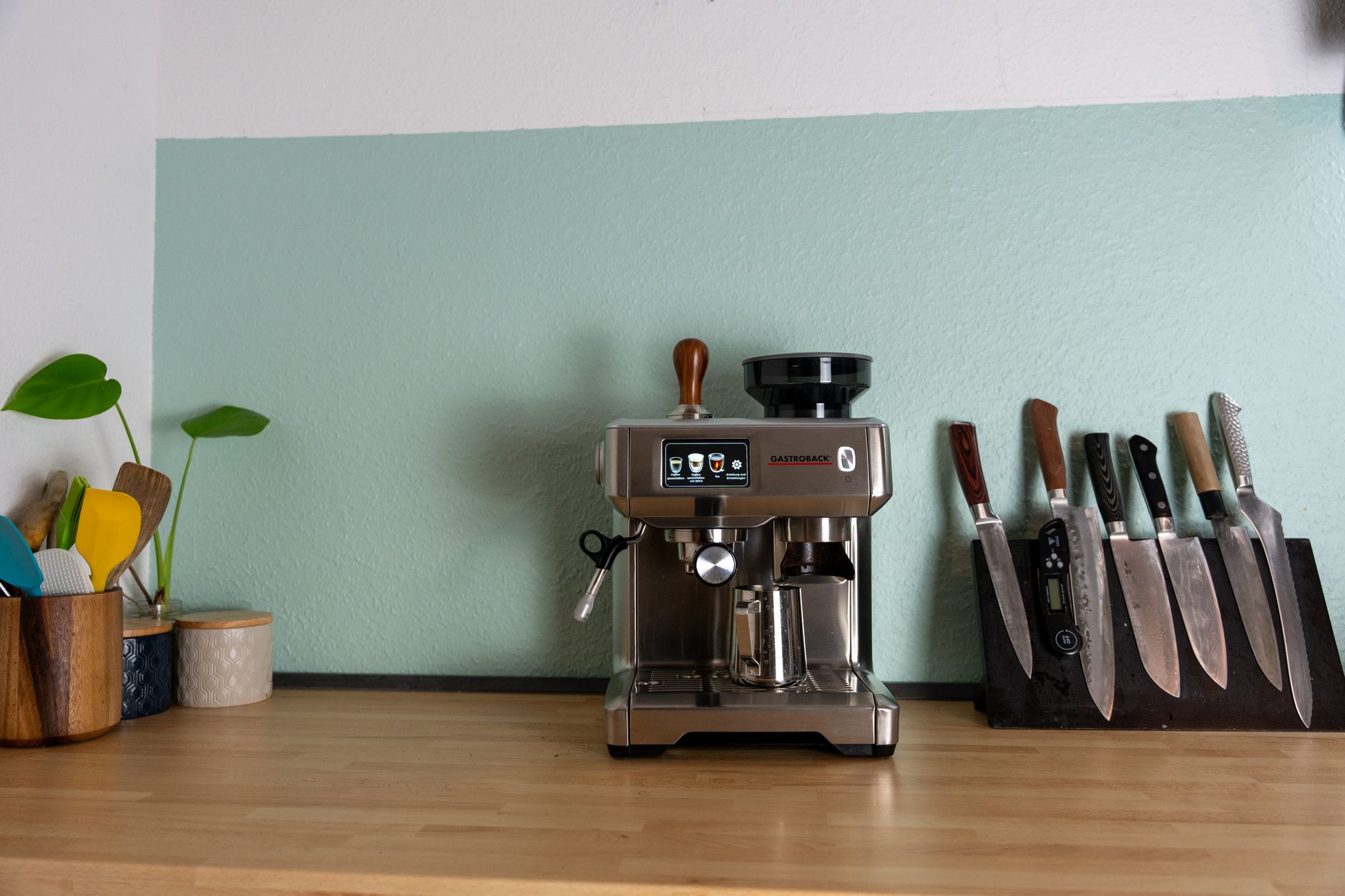 Photo: valverdesupport via Pexels
That said, “best” fractures fast once you add context. A serious espresso geek who already owns a grinder should look at the Gaggia Classic Pro
The machines below cover every realistic home use case from $150 to $1,500.
The 6 Best Home Espresso Machines in 2026
1. Breville Barista Express — Best Overall
Built-in grinder plus PID makes this the best home espresso machine for beginners who want real espresso without buying a separate grinder. The 54mm portafilter and dose control ring give enough precision to grow into. Price sits around $700 — high for a first machine, justified for a daily driver.
 Photo: Ionut Photos via Pexels
- Boiler: Thermocoil (single)
- PID: Yes
- Grinder: Integrated 40mm conical steel burrs, 16 grind settings
- Pump: 15-bar vibratory
- Steam wand: Manual, single hole
The grinder is the hidden value. A decent standalone grinder costs $150–300. Buying both separately to match what the Barista Express does all-in costs more and takes more counter space. The conical burrs aren’t exceptional by grinder-only standards — they struggle with very light roasts — but for espresso-range grinding of medium and dark roasts, they’re more than adequate.
The single thermocoil boiler means you wait 30–45 seconds between pulling a shot and steaming milk. Not a dealbreaker for one or two drinks, annoying if you’re making rounds for four people.
2. Gaggia Classic Pro — Best Under $500
The Gaggia Classic Pro is the best espresso machine under $500 for anyone willing to learn. Commercial 58mm portafilter, solenoid valve, and a no-nonsense build that’s been modded and documented to death by the home espresso community. No PID stock, but a $30 PID kit is a one-hour install.
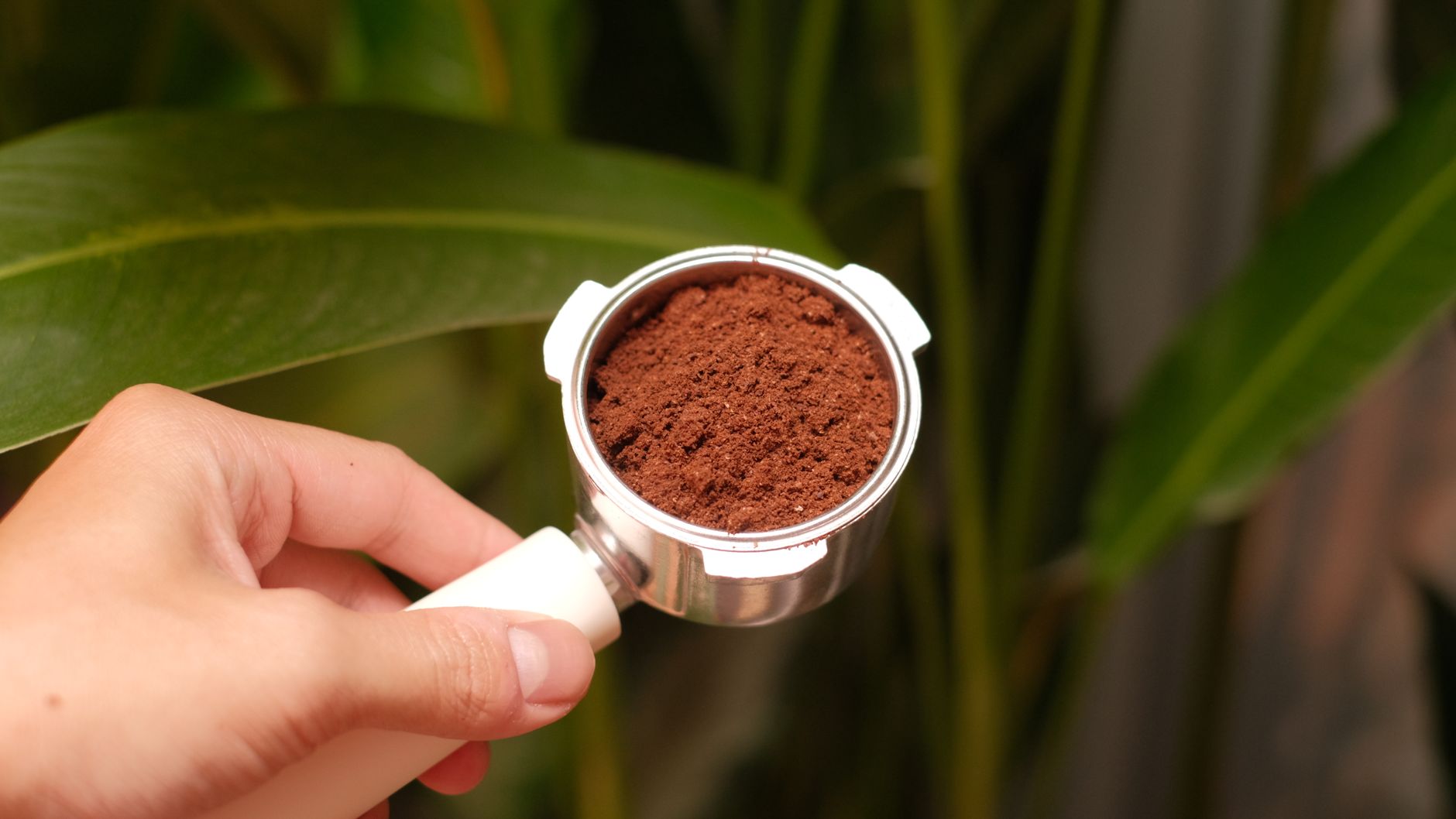 Photo: Pew Nguyen via Pexels
- Boiler: Single aluminum (PID-upgradeable)
- Portafilter: 58mm commercial standard
- PID: No (aftermarket kit available)
- Pump: 15-bar vibratory
- Steam wand: Commercial-style, panarello removable
The 58mm portafilter matters: every commercial basket, distributor, and tamper fits. When you upgrade your technique or your grinder, the machine keeps up. The Barista Express’s 54mm is proprietary — accessories are narrower.
Stock temperature stability is the one real weakness. Without a PID, you’re temperature surfing: pulling the shot a set number of seconds after the thermostat trips. Learnable, but the PID mod eliminates the variable entirely.
3. De’Longhi La Specialista Arte — Best Mid-Range
The La Specialista Arte targets the same buyer as the Barista Express but takes a different approach — sensor grinding and manual lever tamping replace guesswork. Around $600, it produces more consistent results out of the box, at the cost of less manual control.
- Boiler: Thermoblock (dual)
- Portafilter: 51mm
- PID: Yes
- Pump: 15-bar vibratory
- Steam: My Latte Art steam wand (manual)
The dual thermoblock means near-simultaneous steaming and brewing — a meaningful upgrade over the Barista Express for milk drink volume. The 51mm portafilter is a step down from 58mm but better than 54mm for third-party accessories.
4. Rancilio Silvia Pro X — Best Single Boiler Under $1,000
The Silvia Pro X ships with a dual PID (brew and steam temperatures set independently), a commercial 58mm group head, and a build that survives a decade of daily use. It’s the machine you buy when you’ve outgrown the Gaggia and aren’t ready to jump to a heat exchanger.
 Photo: 易 凡 via Pexels
- Boiler: Single brass (dual PID)
- Portafilter: 58mm
- PID: Yes (dual)
- Pump: 15-bar vibratory
- Steam: Commercial E61-style wand
The dual PID separates it from the standard Silvia: you dial in brew temperature to 0.1°C and set a separate steam temperature without the thermal mass games of a single-PID machine. For light roast espresso — where brew temperature is the single biggest variable — this matters more than any other spec on this list.
5. De’Longhi Dedica Arte — Best Compact Machine
At 6 inches wide, the Dedica Arte fits under low cabinets and beside the kettle on the narrowest kitchen counter. Thermoblock heating reaches brew temperature in 35 seconds. It’s the best home espresso machine if space is the constraint, not performance.
- Boiler: Thermoblock
- Portafilter: 51mm
- PID: No
- Pump: 15-bar vibratory
- Steam: Panarello with auto-froth
Extraction quality is solid for the price ($250–280). The panarello wand produces wet microfoam automatically — not the tight, glossy foam for latte art, but fine for cappuccinos. Baristas who want steaming control can pull the panarello sleeve off and use the bare steam tip underneath.
6. Breville Oracle Touch — Best Semi-Automatic
The Oracle Touch automates dosing, tamping, and milk texturing, leaving the user to choose a recipe on the touchscreen. At $1,500, it’s priced near entry-level prosumer machines that require skill — the premium is for automation, not extraction quality.
- Boiler: Dual (independent brew + steam)
- Portafilter: 58mm
- PID: Yes
- Pump: 15-bar vibratory
- Grinder: Integrated 58mm flat burrs
The dual boiler is the standout spec at this price. You can pull a shot and steam milk simultaneously — a meaningful workflow upgrade over any single-boiler machine. The flat burrs in the integrated grinder are genuinely good, better than the Barista Express’s conical setup.
Full Specs Comparison
| Machine | Price | Boiler | Portafilter | PID | Pump | Best For |
|---|---|---|---|---|---|---|
| Breville Barista Express | ~$700 | Single thermocoil | 54mm | Yes | 15-bar vibe | Best all-rounder, built-in grinder |
| Gaggia Classic Pro | ~$450 | Single aluminum | 58mm | No (mod) | 15-bar vibe | Espresso purists, modders |
| De’Longhi La Specialista Arte | ~$600 | Dual thermoblock | 51mm | Yes | 15-bar vibe | Consistent milk drinks |
| Rancilio Silvia Pro X | ~$900 | Single brass | 58mm | Dual | 15-bar vibe | Light roast, serious home use |
| De’Longhi Dedica Arte | ~$270 | Thermoblock | 51mm | No | 15-bar vibe | Space-constrained kitchens |
| Breville Oracle Touch | ~$1,500 | Dual | 58mm | Yes | 15-bar vibe | Automation, milk drink volume |
Coffee Module A — Equipment Deep Dive
Specs Table: Key Variables That Affect Shot Quality
| Spec | Why It Matters |
|---|---|
| Boiler type | Single = wait between shot and steam; dual/HX = simultaneous |
| Portafilter size | 58mm = full commercial accessory ecosystem; 51/54mm = limited |
| PID | Locks brew temp to ±0.5°C; critical for light roast extraction |
| Pump type | Vibratory = loud, sufficient; rotary = quiet, more stable pressure |
| Burr size (if integrated) | Larger burrs = less heat, more consistent grind particle distribution |
 Photo: István Szitás via Pexels
Verdict by User Archetype
Milk drink focus (lattes, cappuccinos daily): De’Longhi La Specialista Arte or Oracle Touch. Dual thermoblock/boiler means no waiting between espresso and steam. The auto-froth on the Dedica covers the budget end.
Espresso purist: Gaggia Classic Pro with a $30 PID mod and a standalone grinder (Baratza Encore ESP or DF64). Spend what you save on beans. The 58mm portafilter future-proofs the setup.
Convenience-first: Breville Barista Express. One machine, one cord, one learning curve. The integrated grinder is genuinely good enough that most users never feel the need to upgrade it.
What to Look for When Buying
Boiler Configuration
Single-boiler machines (Classic Pro, Silvia, Barista Express) require a pause between espresso and steaming while the boiler re-heats to steam temperature. For one or two drinks: no issue. For three or more in a session: frustrating.
Dual boilers maintain separate brew and steam temperatures simultaneously. They cost more, use more electricity, and take longer to warm up — but they’re the right tool for households that drink volume.
Thermoblock machines (Dedica, La Specialista Arte) heat water on demand, trading temperature stability for fast heat-up times. Good for convenience; not ideal for light roast extraction where ±2°C changes the shot.
Portafilter Size
58mm is the commercial standard. Every basket manufacturer, every distribution tool, every tamper fits. If you plan to upgrade baskets (VST, IMS, Pesado), buy a 58mm machine.
54mm (Breville) and 51mm (De’Longhi) have improving ecosystems but remain narrower. Not a dealbreaker, but worth knowing before you commit.
Do You Need a Built-In Grinder?
Only if you’re not buying a standalone grinder. A dedicated single-dose grinder at the same price point as the integrated grinder in any all-in-one machine will grind better — more consistent particle distribution, less heat, better retention. The convenience trade-off is real and valid for many users. The performance trade-off is also real.
→ See Also
- The Complete Guide to Espresso Machines (2026) — full buying framework, from entry-level to prosumer
- Best Espresso Machine Under $200 (2026) — capsule and entry pump machines worth considering
- Best Espresso Machine Under $500 (2026) — Gaggia Classic Pro, DeLonghi EC685, and close competitors
FAQ
What is the best home espresso machine for beginners? The Breville Barista Express is the best starting point because the integrated grinder removes one major variable. Beginners learning to dial in espresso already have enough to manage — grinder choice and grinder settings shouldn’t be part of the first month. Once technique is solid, a standalone grinder upgrade is always available.
Is 15 bar enough pressure for espresso? Yes — and the 15-bar figure on most home machines is the pump’s maximum pressure, not brew pressure. Real espresso extracts at 9 bar. All the machines listed here use 15-bar vibratory pumps with an OPV (over-pressure valve) that regulates down to 9 bar at the puck. The pump rating is marketing; the OPV setting is what matters.
Do I need a PID for home espresso? For medium and dark roasts: no, a PID is nice-to-have. For light roast espresso — where the brew window is narrower and temperature sensitivity is higher — a PID is the single upgrade that most improves consistency. The Gaggia Classic Pro’s $30 aftermarket PID mod is the best value upgrade in home espresso.
How long do home espresso machines last? The Gaggia Classic Pro and Rancilio Silvia are routinely reported at 15–20 years with standard maintenance (descaling, gasket replacement every 2–3 years). Breville machines typically run 7–10 years. Thermoblock machines (Dedica, some De’Longhi) are harder to repair and tend toward 5–8 years. Build materials — brass boiler vs. aluminum vs. thermoblock — are the primary lifespan differentiator.
What’s the difference between a single-boiler and a dual-boiler espresso machine? A single-boiler machine uses one boiler for both brewing (88–96°C) and steaming (125–135°C). You pull the shot, then wait 30–60 seconds for the boiler to re-heat before steaming. A dual-boiler machine maintains both temperatures independently and simultaneously — you can steam while the next shot brews. Dual boilers cost more and heat up slower, but they’re necessary for any household making more than two milk drinks at a time.
Can I make good espresso without a separate grinder? Yes, with caveats. The integrated grinders in the Breville Barista Express and Oracle Touch are genuinely usable for medium to dark roasts. They struggle with very light roasts and the grind adjustment isn’t fine enough for precise dialing. If your coffee source is a local roaster doing light-roast single origins, a standalone grinder matters. If you’re buying supermarket espresso blends or medium roasts, the built-in grinder is sufficient.
Editorial methodology: Assessments are based on manufacturer specifications, published user reviews, and editorial research. Physical hands-on testing is noted explicitly where it occurred. Rankings reflect our editorial judgment and are not influenced by affiliate commission rates. Full editorial policy · Affiliate disclosure