Contents
Breville Barista Express vs Pro: Which One Wins?
TL;DR: The Barista Pro is the better machine — faster heat-up, a more capable grinder, and a proper steam wand. But the Barista Express is $100–150 cheaper and still makes excellent espresso. Buy the Express if you’re budget-conscious or new to espresso; buy the Pro if you pull multiple shots daily or steam milk seriously.
The Core Difference Between These Two Machines
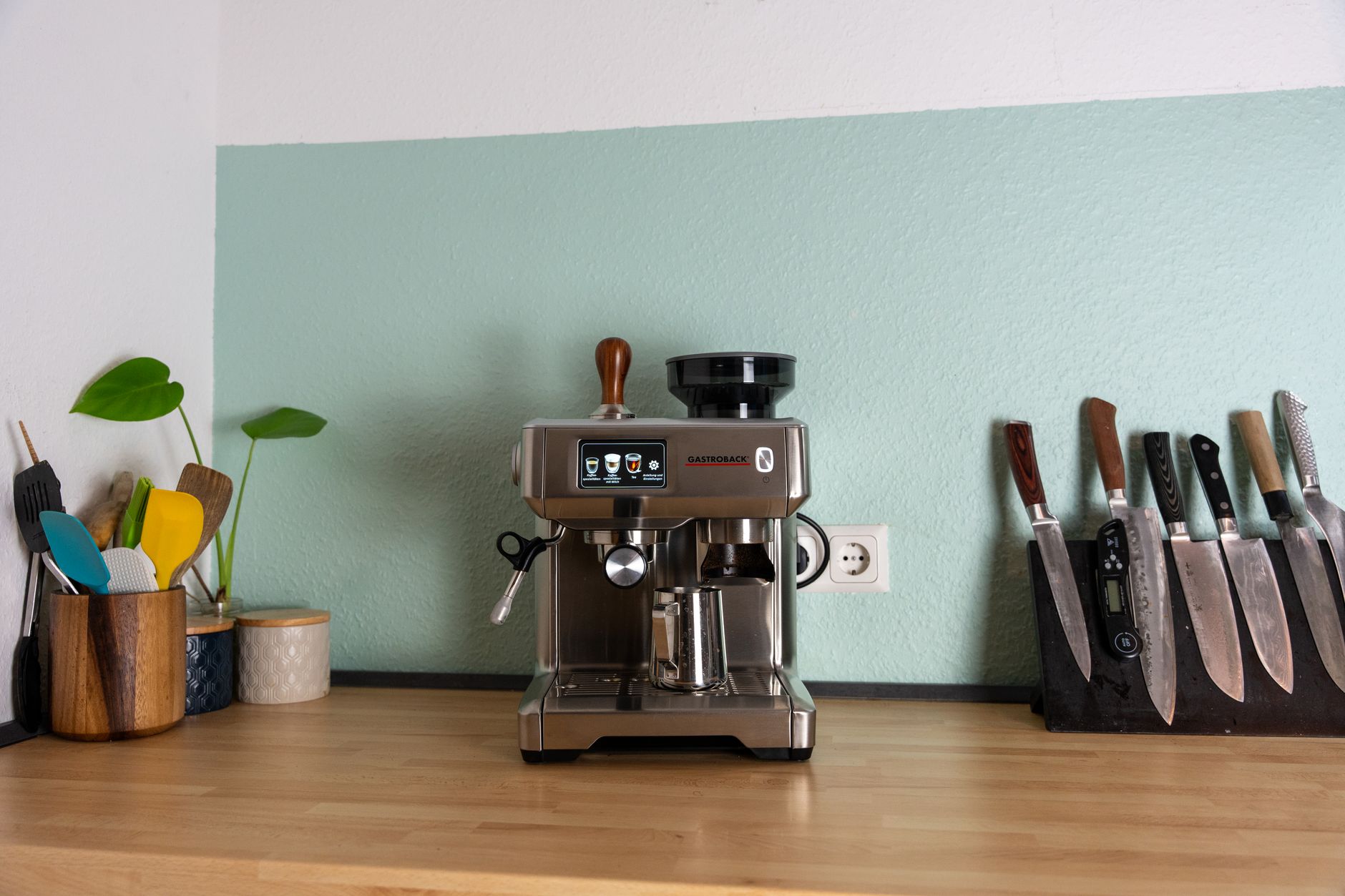
The Barista Express uses a traditional thermocoil heating system that takes 30–45 seconds to reach brew temperature. The Barista Pro uses ThermoJet — it heats in 3 seconds. That single difference cascades into a faster workflow, faster transitions between brewing and steaming, and more consistent shot-to-shot temperature stability.
 Photo: Amelia Hallsworth via Pexels
Both machines are all-in-one espresso makers with integrated conical burr grinders — their defining advantage over budget machines without grinders. You buy one unit, dial in once, pull shots. That premise is identical. Everything else separates them.
The Barista Express
Specs: Barista Express vs Barista Pro
| Spec | Barista Express | Barista Pro |
|---|---|---|
| Heating system | Thermocoil | ThermoJet |
| Heat-up time | ~30–45 seconds | ~3 seconds |
| Boiler type | Single thermocoil | Single thermocoil |
| Portafilter size | 54mm | 54mm |
| PID | Yes | Yes |
| Pump type | 15-bar vibratory | 15-bar vibratory |
| Grinder | 40mm conical burr | 54mm conical burr |
| Grind settings | 25 (stepped) | 30 (stepped) |
| Display | LED buttons | LCD display |
| Steam wand | Panarello (assisted) | Manual steam wand |
| Water tank | 67 oz | 67 oz |
| Bean hopper | 8 oz | 8 oz |
| Dimensions | 12.5“ × 13.2“ × 15.8“ | 12.5“ × 14.2“ × 15.8“ |
| Weight | 23 lbs | 24 lbs |
| Price (approx.) | $699–$749 | $849–$899 |
Both share the same 54mm portafilter — a meaningful detail. Third-party baskets, distributors, and tampers for this size are widely available and affordable.
Grinder Comparison
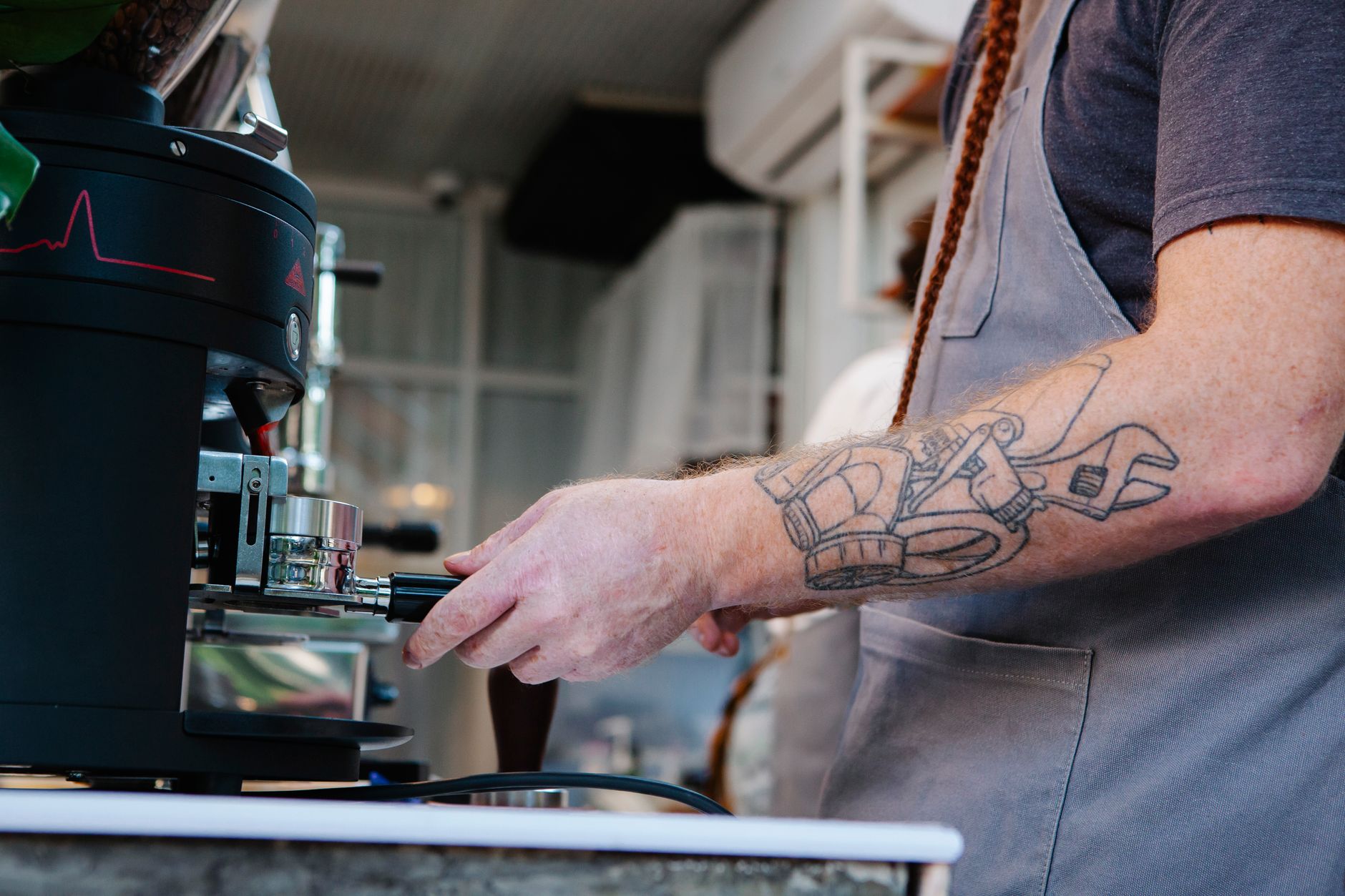
The Pro’s grinder is meaningfully better. The larger 54mm burrs (vs 40mm on the Express) grind faster, run cooler, and produce a more uniform particle distribution. More grind settings (30 vs 25) also give you finer adjustment when dialing in.
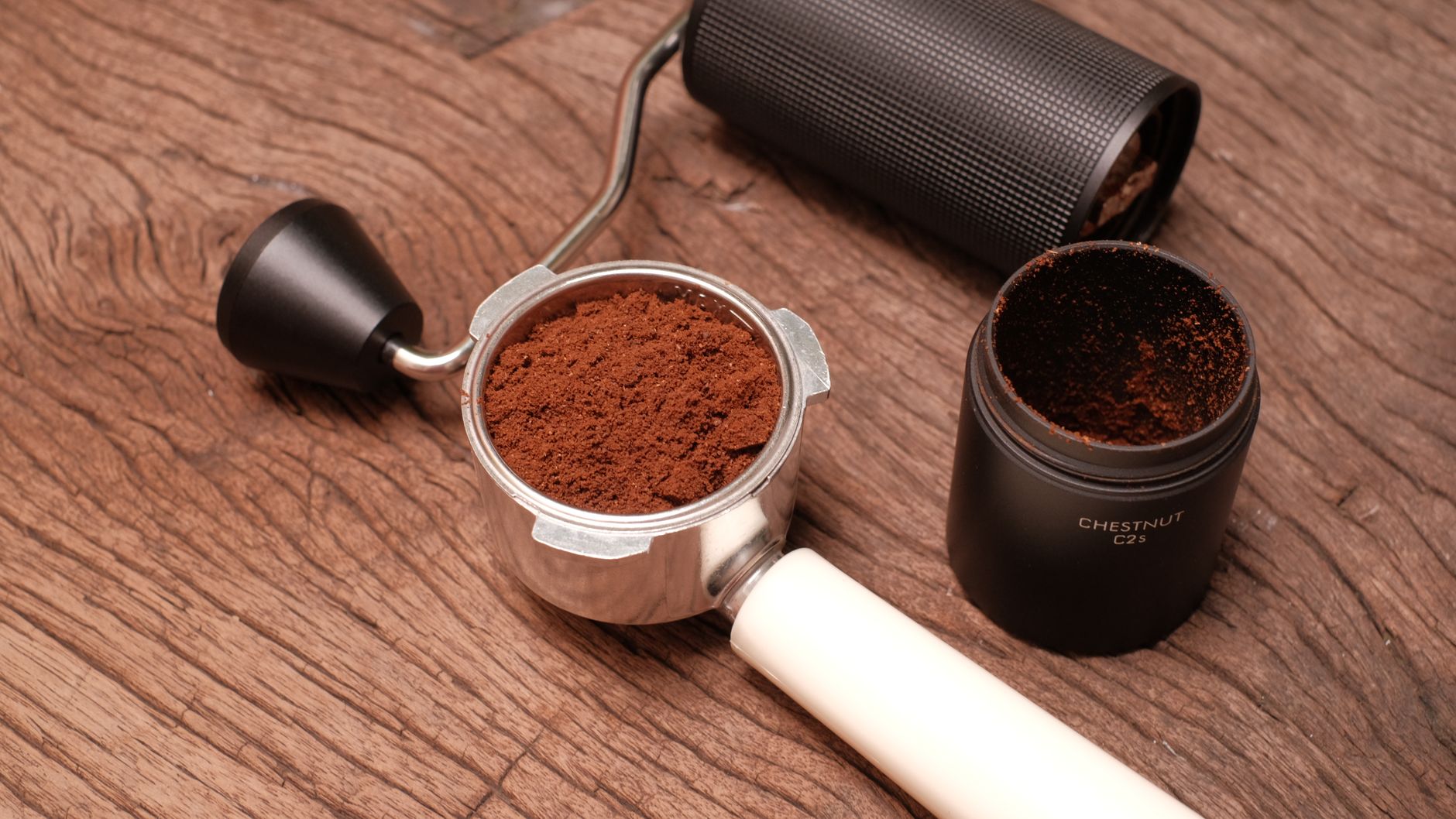 Photo: Pew Nguyen via Pexels
In practice, the Express grinder is entirely adequate for home use — it’s what made the machine famous. But if you’re comparing side by side, the Pro’s burrs produce less fines, slightly better extraction uniformity, and handle lighter roasts more cleanly.
Neither machine gives you a standalone grinder that competes with a dedicated unit like a Baratza Sette or Niche Zero at the same price. The convenience premium is real, and both machines charge it.
Steam Wand: The Biggest Practical Difference
Skip the Express’s panarello wand if you care about latte art. It auto-textures milk using a steam-air mixture — fine for cappuccino foam, mediocre for silky microfoam. The Pro ships with a manual steam wand that behaves like a prosumer machine, giving you real control over milk texture.
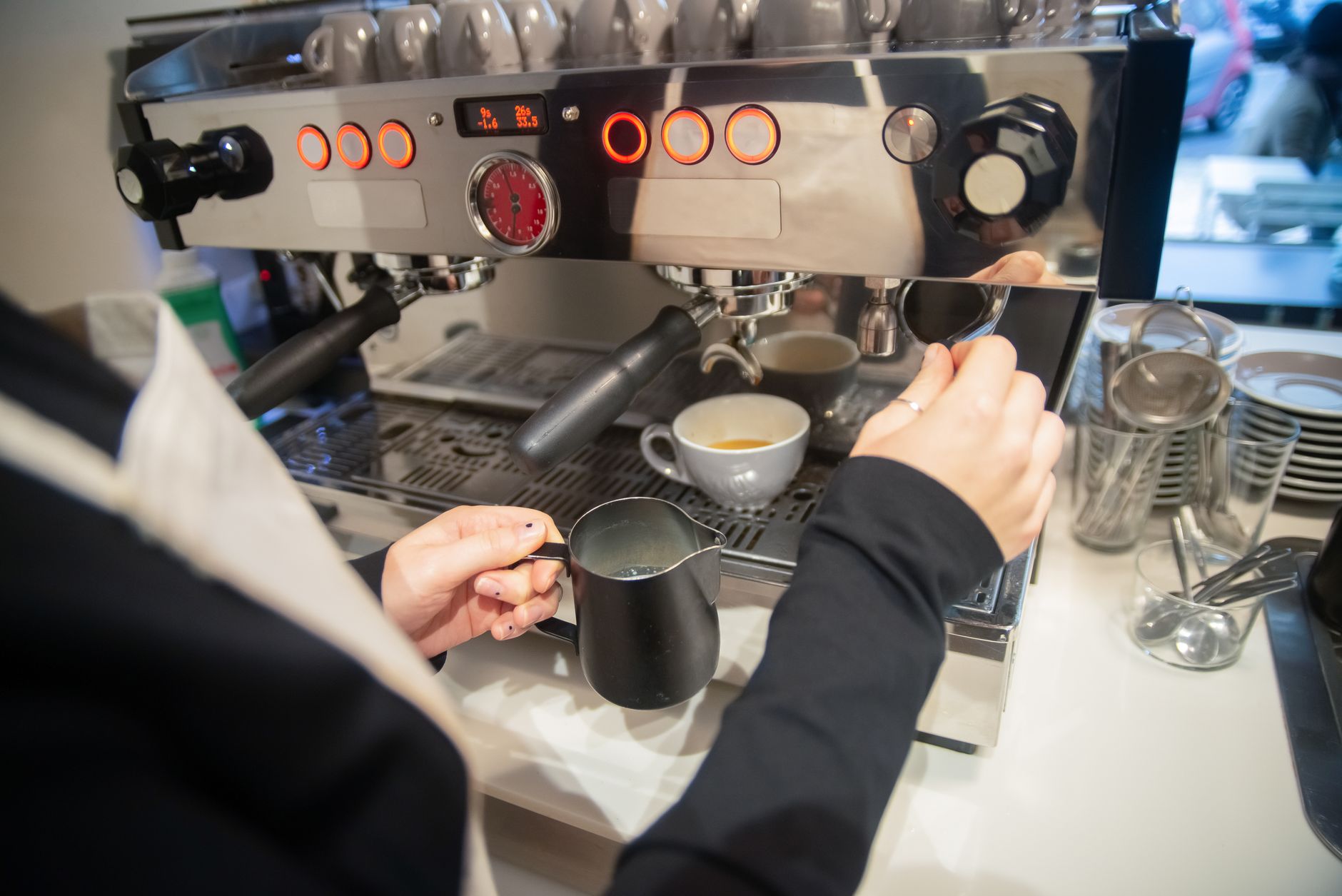 Photo: Kampus Production via Pexels
This is the dividing line between the two machines for milk-based drinks:
- Barista Express (panarello): Produces thick, airy foam. Beginner-friendly. Inconsistent for latte art.
- Barista Pro (manual wand): Produces silky microfoam with practice. Full control. Closer to café-quality results.
The panarello on the Express can be removed to expose the bare steam tip underneath, which allows manual steaming — but it’s a workaround, not a design intent. The Pro’s wand is purpose-built for manual technique.
Shot Quality
Both machines pull excellent espresso when dialed in. PID temperature control ships on both, which keeps shot temperatures within ±1°C of target — a feature that was premium-only five years ago.
Where the Pro edges ahead:
- Faster temperature surfing. ThermoJet transitions from brew temp to steam temp and back almost instantly. On the Express, you wait.
- More grind precision. 30 settings vs 25 gives you narrower adjustments when chasing a specific flavor profile.
- Shot consistency. The Express is consistent; the Pro is more consistent. At home, pulling 1–3 shots a day, you may not notice.
Where the Express holds its own:
- The 40mm conical burrs still produce excellent espresso. Countless competition-winning home baristas have used this machine.
- PID is present. Pressure profiling isn’t on either machine, so neither has an advantage there.
Workflow Speed
For high-volume home use — multiple espressos, back-to-back — the Pro’s 3-second heat-up and fast steam-brew cycling are a genuine quality-of-life upgrade. For one or two shots in the morning, the Express’s 30-second warm-up is a non-issue.
ThermoJet’s speed matters most when:
- You’re making drinks for 2–3 people at once
- You pull an espresso, then immediately steam milk for a latte
- You forgot to warm up the machine before guests arrive
For a solo morning routine, the Express warm-up becomes automatic habit within a week.
Comparison: Who Should Buy Which
| Barista Express | Barista Pro | |
|---|---|---|
| Price | ~$699–$749 | ~$849–$899 |
| Boiler | Thermocoil | ThermoJet |
| Portafilter | 54mm | 54mm |
| PID | Yes | Yes |
| Pump | 15-bar vibratory | 15-bar vibratory |
| Grinder burr | 40mm conical | 54mm conical |
| Steam wand | Panarello | Manual |
| Best For | Budget-conscious, espresso focus, beginners | Milk drinks, speed, daily volume, intermediate+ |
Verdict by User Archetype
Espresso purist: Either machine pulls excellent shots. The Pro’s grinder is better; the Express’s is good enough. The $150 price gap is better spent on fresh beans and a quality tamper.
Milk drinker: Buy the Pro. The manual steam wand alone justifies the upgrade. Panarello foam is a ceiling the Express users hit fast.
Convenience-first / beginner: Start with the Express. Simpler to dial in, lower financial commitment, same PID and portafilter. Upgrade to a standalone grinder later if you outgrow it.
→ See Also
- The Complete Guide to Espresso Machines (2026)
- Best Espresso Machine Under $200 (2026)
- Best Espresso Machine Under $500 (2026)
FAQ
Is the Barista Pro worth the extra $150 over the Barista Express? If you make milk-based drinks daily, yes — the manual steam wand and ThermoJet heat-up alone justify the difference. If you drink straight espresso and pull one or two shots a day, the Express performs at 95% of the Pro for less money.
Can the Barista Express make latte art? Technically yes, but it’s harder than it should be. The panarello wand produces coarser foam that doesn’t integrate as smoothly into espresso. Remove the panarello attachment to expose the bare tip for manual steaming — results improve significantly, though the steam pressure is still lower than the Pro’s wand.
Do both machines use the same portafilter? Yes. Both use a 54mm portafilter. This means baskets, puck screens, and distribution tools are interchangeable between the two machines and widely available from third parties.
How long does the Breville Barista Express last? Most units run 5–10 years with regular descaling and cleaning. The brew head gasket typically needs replacement around year 3–5 depending on usage volume. Breville’s parts availability is good, and repairs are DIY-friendly compared to Italian pump machines.
Which machine is easier to dial in for beginners? The Express has a slight edge — the simpler LED interface removes decision paralysis, and the panarello wand is more forgiving for new steamers. That said, both machines use the same grind-dose-tamp workflow, so neither is dramatically harder than the other once you understand the basics of espresso extraction.
Does either machine have pressure profiling? No. Neither the Barista Express nor the Barista Pro supports pressure profiling. For pressure profiling in the Breville lineup, you need the Dual Boiler or the Oracle Touch. Both machines use a standard vibratory pump with fixed 9-bar brew pressure.
Editorial methodology: Assessments are based on manufacturer specifications, published user reviews, and editorial research. Physical hands-on testing is noted explicitly where it occurred. Rankings reflect our editorial judgment and are not influenced by affiliate commission rates. Full editorial policy · Affiliate disclosure