Contents
Coffee Grind Size Chart: Complete Visual Guide
TL;DR: The coffee grind size chart maps grind coarseness to brew method — coarse for French press, medium for drip, fine for espresso. Getting this wrong is the single most fixable cause of bitter or sour coffee. Match your grind to your brewer and you’ve solved 80% of extraction problems before touching water temperature or dose.
What Is a Coffee Grind Size Chart?
The coffee grind size chart is a reference tool that matches particle size — measured in microns or described as extra-coarse through extra-fine — to specific brewing methods. Each brew method extracts at a different rate, so grind size controls contact time and surface area to hit the target extraction window.
 Photo: 🇻🇳🇻🇳 Việt Anh Nguyễn 🇻🇳🇻🇳 via Pexels
| Grind Level | Particle Size (approx.) | Looks Like | Brew Method |
|---|---|---|---|
| Extra Coarse | 1500 µm | Sea salt crystals | Cold brew, cowboy coffee |
| Coarse | 900–1200 µm | Rock salt, peppercorns | French press, percolator |
| Medium-Coarse | 750–900 µm | Rough sand | Chemex, Clever Dripper |
| Medium | 500–700 µm | Table sand | Drip machine, siphon |
| Medium-Fine | 400–500 µm | Fine beach sand | Pour-over (V60), AeroPress |
| Fine | 200–400 µm | Table salt | Espresso, stovetop Moka pot |
| Extra Fine | <200 µm | Powdered sugar, flour | Turkish coffee, cezve |
Why Grind Size Controls Your Cup
Grind size determines surface area and, by extension, extraction speed. Too coarse — water rushes through and under-extracts, leaving your cup sour and thin. Too fine — water lingers, over-extracts, and you get bitter, harsh coffee. Every other variable (temperature, ratio, time) works within the window that grind size opens or closes.
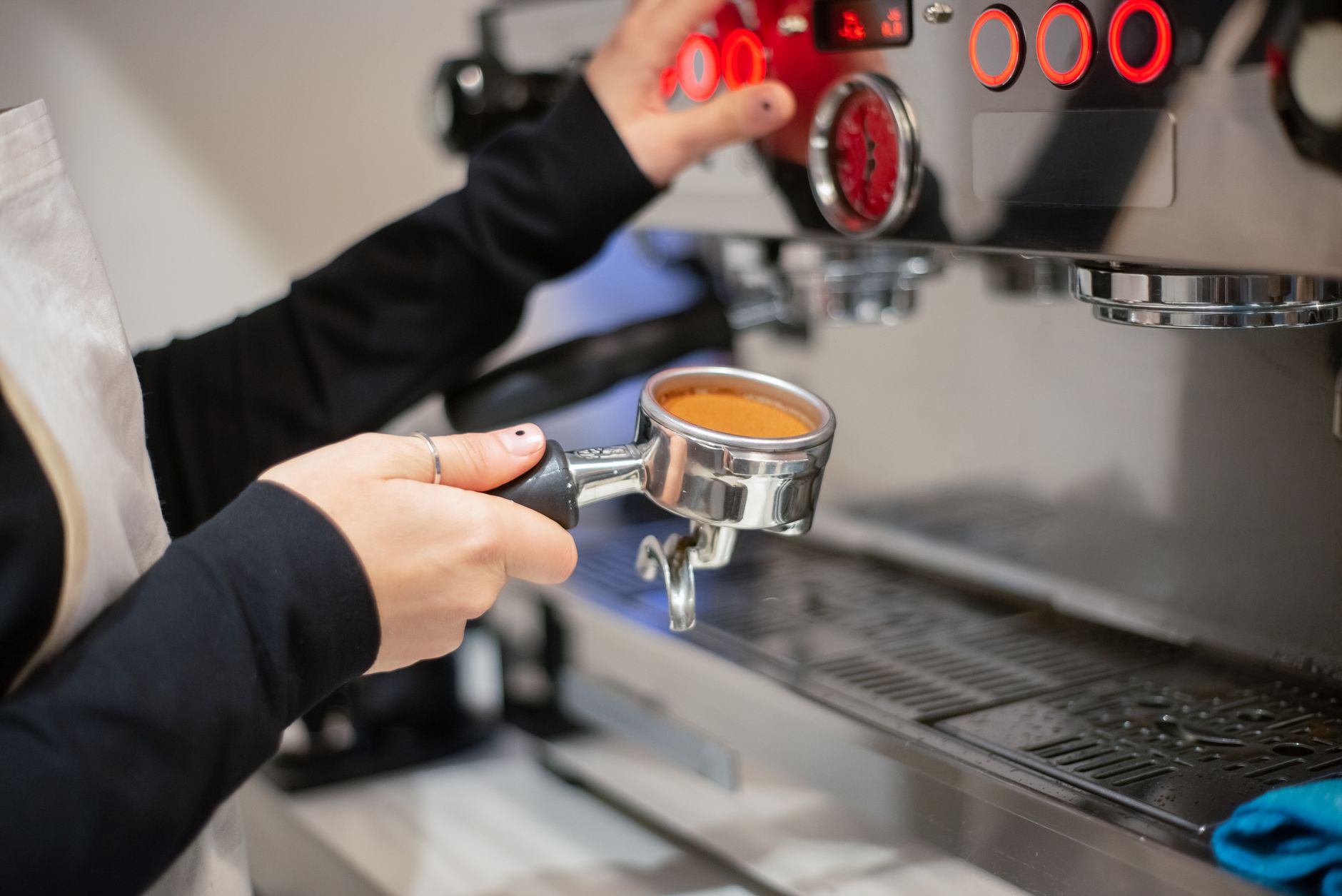 Photo: Kampus Production via Pexels
The Extraction Science (Short Version)
Coffee dissolves in a specific order: fruity acids first, sweetness in the middle, bitter compounds last. Grind size controls how far along that extraction timeline you stop:
- Under-extracted (too coarse): Sour, salty, hollow — only the early acids pulled
- Well-extracted (correct): Sweet, balanced, full-bodied
- Over-extracted (too fine): Bitter, dry, astringent — bitter compounds dominated
Contact time drives this. Espresso uses 9 bar of pressure and 25–30 seconds — it needs a fine grind to create resistance. French press steeps for 4 minutes with no pressure — a coarse grind prevents over-extraction in that time.
Grind Consistency Matters as Much as Size
A blade grinder produces mixed particle sizes in the same batch — some will over-extract, others under-extract simultaneously. You taste both, and they cancel out clarity rather than blend harmoniously.
A burr grinder — flat or conical — produces a uniform particle size. That uniformity is what lets you dial in a recipe and repeat it. If you’re consulting a coffee grind size chart and getting inconsistent results, the grinder is likely the bottleneck before the grind setting.
→ See: Burr vs Blade Grinder: Why It Matters for Your Coffee
Grind Settings by Brew Method
Each brew method has a target grind range, not a single fixed point. Your specific grinder’s numbering system is proprietary — “5” on one grinder is not “5” on another. Use sensory feedback (taste, flow rate, brew time) to calibrate within the range, not just the number.
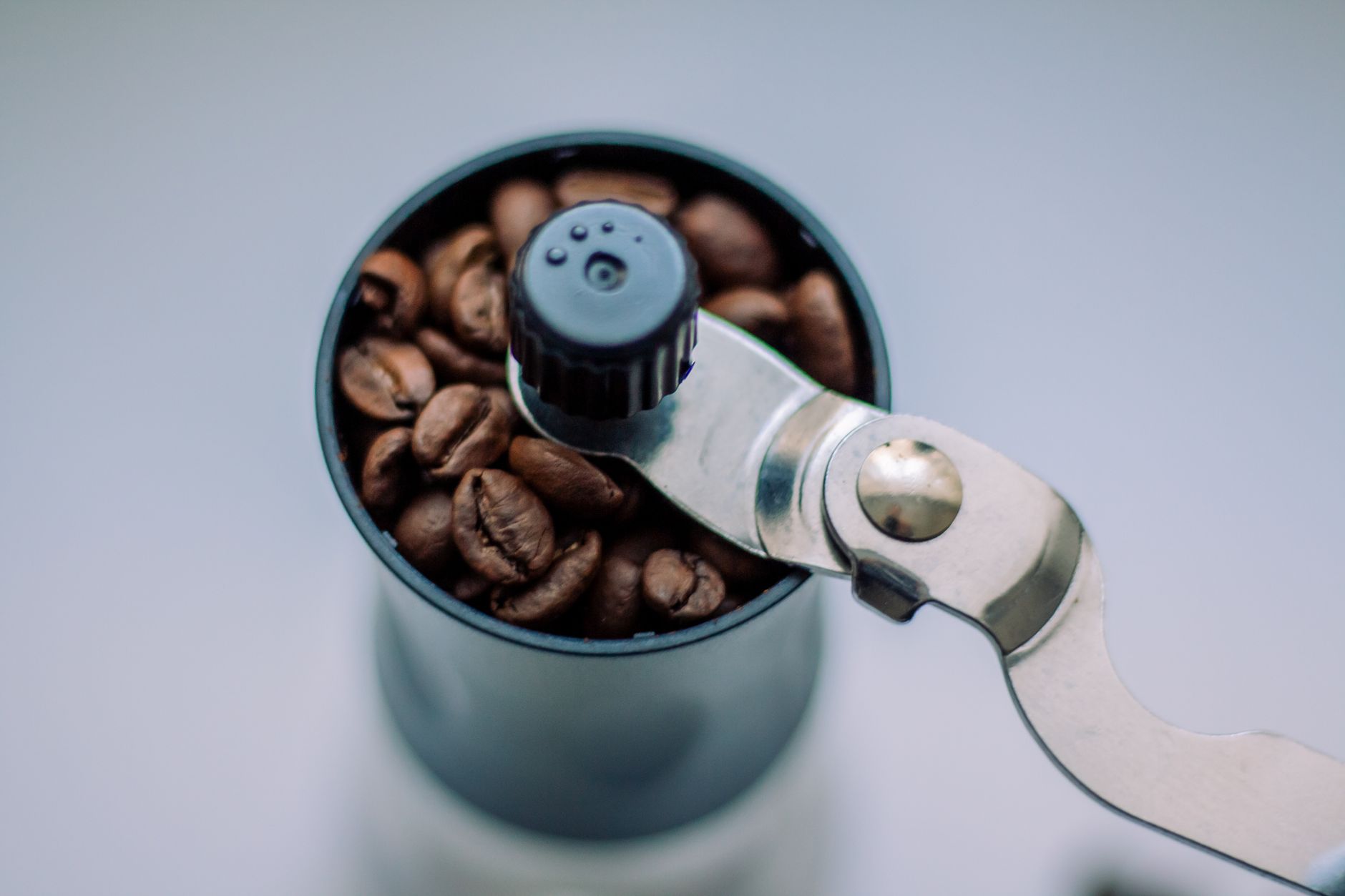 Photo: Sedanur Kunuk via Pexels
Espresso: Fine (200–350 µm)
Target brew time: 25–30 seconds for a 1:2 ratio (18g in, 36g out).
- Too slow / channeling: Grind coarser
- Too fast / watery: Grind finer
- Sour: Grind finer or increase dose
- Bitter: Grind coarser or reduce dose
Espresso is the most sensitive brew method on the chart. A half-step on the grind adjustment changes flow rate meaningfully. Temperature and pressure stability matter here — which is why espresso machines with PID controllers and quality pumps justify their price.
Pour-Over (V60, Kalita Wave): Medium-Fine (400–500 µm)
Target total brew time: 2:30–3:30 minutes for 250ml.
Pour-over rewards grind precision more than most methods because you control pour rate — you can compensate for a slightly off grind, which also means you can mask problems. Nail the grind first, then refine pour technique.
Drip Machine: Medium (500–700 µm)
Most home drip machines are calibrated for this range with pre-ground commercial coffee. The problem: pre-ground coffee is stale by the time it reaches your machine. Fresh beans at a true medium grind on a burr grinder will taste dramatically better in the same machine.
French Press: Coarse (900–1200 µm)
The metal mesh filter doesn’t block fine particles — they pass through and create a gritty, muddy cup. Coarse grind keeps most grounds out of your cup and slows extraction to match the 4-minute steep time. If your French press tastes bitter, your grind is probably too fine.
Cold Brew: Extra Coarse (1200–1500 µm)
Cold water extracts slowly. Compensate with very coarse grind and 12–24 hour steep time. The extra coarseness reduces over-extraction risk during the long contact window and makes filtering easier.
AeroPress: Medium to Medium-Fine (400–700 µm)
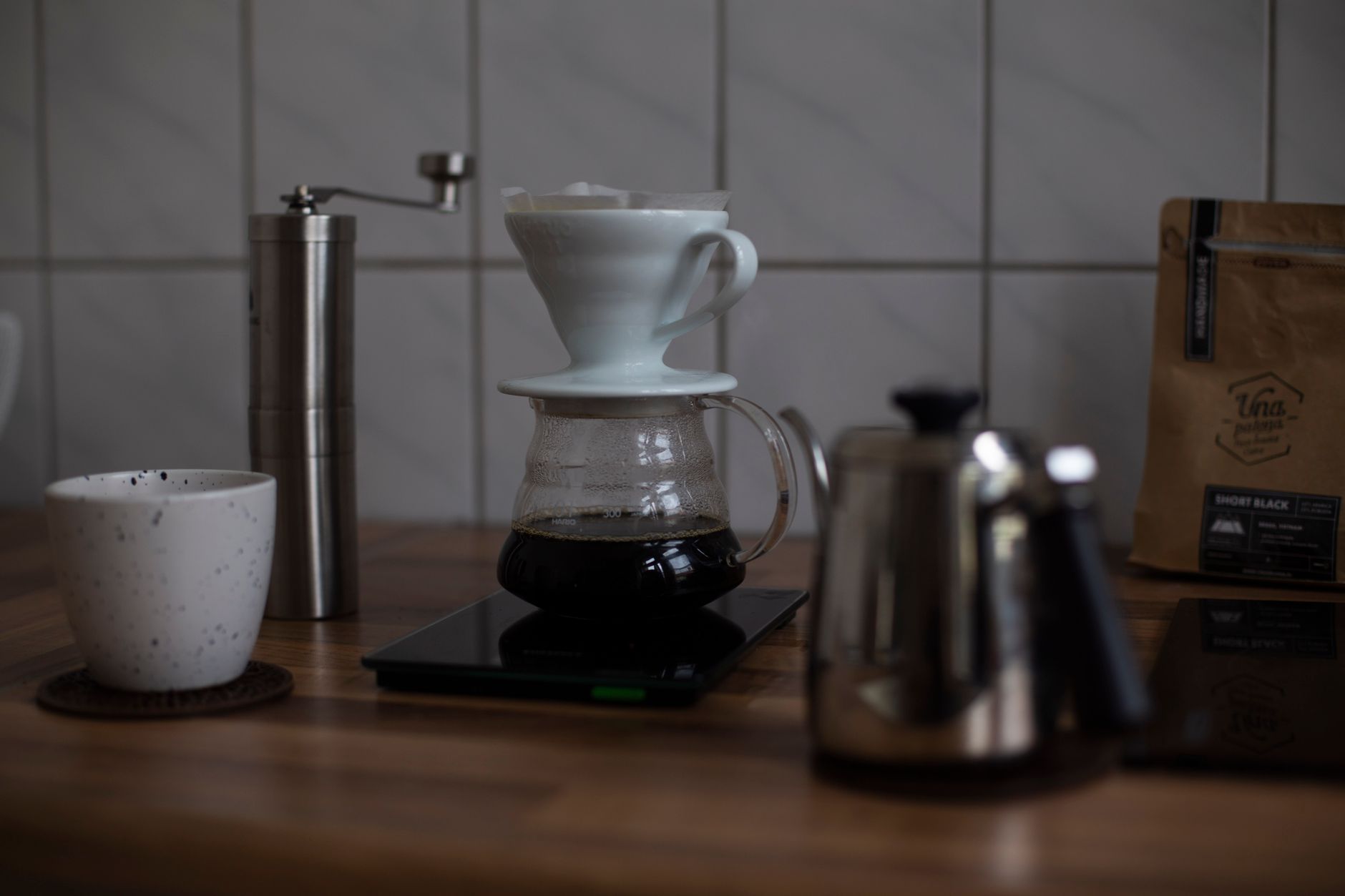 Photo: Valeria Palesska via Pexels
AeroPress is the most versatile method — steep time and pressure are both adjustable, so it tolerates a wider grind range than any other brewer. Start at medium-fine for 2-minute brews; go coarser for longer steeps or inverted method.
Moka Pot: Fine (300–400 µm)
Finer than pour-over, coarser than espresso. The Moka pot forces pressurized steam through grounds — too fine creates excessive back-pressure and can pop the safety valve. Target a grind slightly coarser than espresso, and never tamp the basket.
Turkish Coffee: Extra Fine (<200 µm)
Grounds are not filtered — they settle in the cup. The powder-fine grind creates the thick, syrupy texture that defines the drink. This is the one method where a blade grinder is a workable tool, since uniform particle size matters less when everything settles anyway.
Coffee Module A — Grinder Equipment Review
Getting the grind size right requires a grinder capable of hitting it consistently. Budget grinders often can’t produce true espresso-fine grinds or hold the consistency for pour-over.
Specs: What to Look For
| Spec | What It Controls | Why It Matters |
|---|---|---|
| Burr type | Particle uniformity | Flat = more consistent, conical = quieter/less heat |
| Burr size | Grind capacity & consistency | Larger burrs = more uniform, slower wear |
| RPM | Heat and fines generation | Lower RPM = less heat, fewer fines |
| Adjustment steps | Dialing in precision | More steps = finer tuning for espresso |
| Hopper capacity | Workflow convenience | Larger = bulk grinding, smaller = single-dose |
Grinder Comparison by Use Case
| Grinder | Price | Burr Type | Burr Size | Best For |
|---|---|---|---|---|
| Baratza Encore |
Verdict by User Type
Espresso purist: You need a grinder with fine enough adjustment steps to dial espresso — the Encore tops out at medium-fine. The Eureka Mignon or a dedicated espresso grinder is the minimum.
Pour-over / drip drinker: The Encore or Fellow Ode Gen 2 handles everything you need. The Ode’s 64mm flat burrs produce notably clean cup clarity for filter methods.
Convenience-first: Burr grinder with a hopper you can load weekly. The Virtuoso+ with its 40-step adjustment hits a usable range for most home brew methods with minimal fiddling.
→ See Also
- The Complete Coffee Grinder Guide (2026)
- Burr vs Blade Grinder: Why It Matters for Your Coffee
- Best Coffee Grinders Under $100 (2026)
FAQ
What grind size should I use for a standard drip coffee maker? Medium grind — roughly the texture of table sand — works for most automatic drip machines. If your coffee tastes weak or watery, go slightly finer. If it’s bitter and harsh, go slightly coarser. Most drip machines aren’t adjustable in any other way, so grind size is your primary dial.
Why does my espresso taste sour even with a fine grind? Sour espresso usually means under-extraction — the water moved through too fast. Go finer on the grind first. If you’re already at the finest setting, check your dose (increase by 0.5–1g), water temperature (raise to 93–94°C), or brew time (target 25–30 seconds). Sour and bitter together usually means channeling — check your distribution and tamp.
Can I use the same grind setting for all pour-over methods? Not exactly. The Chemex uses a thicker paper filter that slows flow, so it needs a slightly coarser grind than a V60. The Kalita Wave falls between the two. If you’re switching brewers but using the same grinder setting, expect your brew time to shift — adjust from there.
How does humidity affect grind size? High humidity causes fine ground coffee to clump and flow slower — you may need to grind slightly coarser on humid days to hit your target brew time. This matters most for espresso. It’s a real effect but subtle; prioritize getting a consistent baseline before accounting for humidity.
How often should I recalibrate my grinder setting? Every time you switch coffee origins, roast levels, or bean freshness. Darker roasts are more porous and extract faster — they often need a coarser grind than lighter roasts at the same recipe. Fresh beans off-gas CO2 and behave differently than beans 2–3 weeks post-roast. Your coffee grind size chart gives a starting range; taste and brew time tell you where to land within it.
Editorial methodology: Assessments are based on manufacturer specifications, published user reviews, and editorial research. Physical hands-on testing is noted explicitly where it occurred. Rankings reflect our editorial judgment and are not influenced by affiliate commission rates. Full editorial policy · Affiliate disclosure