Contents
Espresso Pump Pressure Too High or Too Low? Here’s the Fix
TL;DR: Espresso pump pressure should be 9 bar at the group head during extraction. Most machines ship set higher (11–15 bar) to compensate for pressure drop across the puck — what matters is brew pressure, not pump pressure. Dialing this in correctly is the single biggest lever for shot consistency.
How to Adjust Espresso Pump Pressure (5-Step Guide)
What you need: A portafilter pressure gauge kit (~$20–35). Nothing else.
| Step | Action |
|---|---|
| 1 | Fit the pressure gauge adapter to your portafilter (match your machine’s portafilter diameter — 54 mm for Breville, 58 mm for Gaggia/Rancilio/De’Longhi) |
| 2 | Tamp a full 18g dose and run a shot — read the gauge at peak flow |
| 3 | Locate the OPV (over-pressure valve): top panel on Gaggia Classic Pro, side panel on Breville, under the drip tray on De’Longhi Dedica |
| 4 | Adjust: clockwise = higher pressure · counterclockwise = lower |
| 5 | Target 8.5–9.5 bar during extraction, not at idle |
De’Longhi Dedica (EC685): Ships from the factory at 11–14 bar. A $20 OPV spring replacement kit drops it to 9 bar in 10 minutes — the most impactful upgrade for this machine.
Gaggia Classic Pro / Rancilio Silvia / Breville ES1: Usually pre-set to ~9 bar. Verify with a gauge; don’t assume.
For machine-specific settings and the full OPV adjustment walkthrough, see the sections below.
What Is Espresso Pump Pressure?
Direct Answer: Espresso pump pressure is the force the pump applies to push water through the coffee puck, measured in bar (1 bar ≈ 14.5 psi). The industry standard is 9 bar at the group head. Too low and espresso runs watery; too high and it over-extracts into bitterness. Everything else — grind, dose, tamp — works with this pressure, not around it.
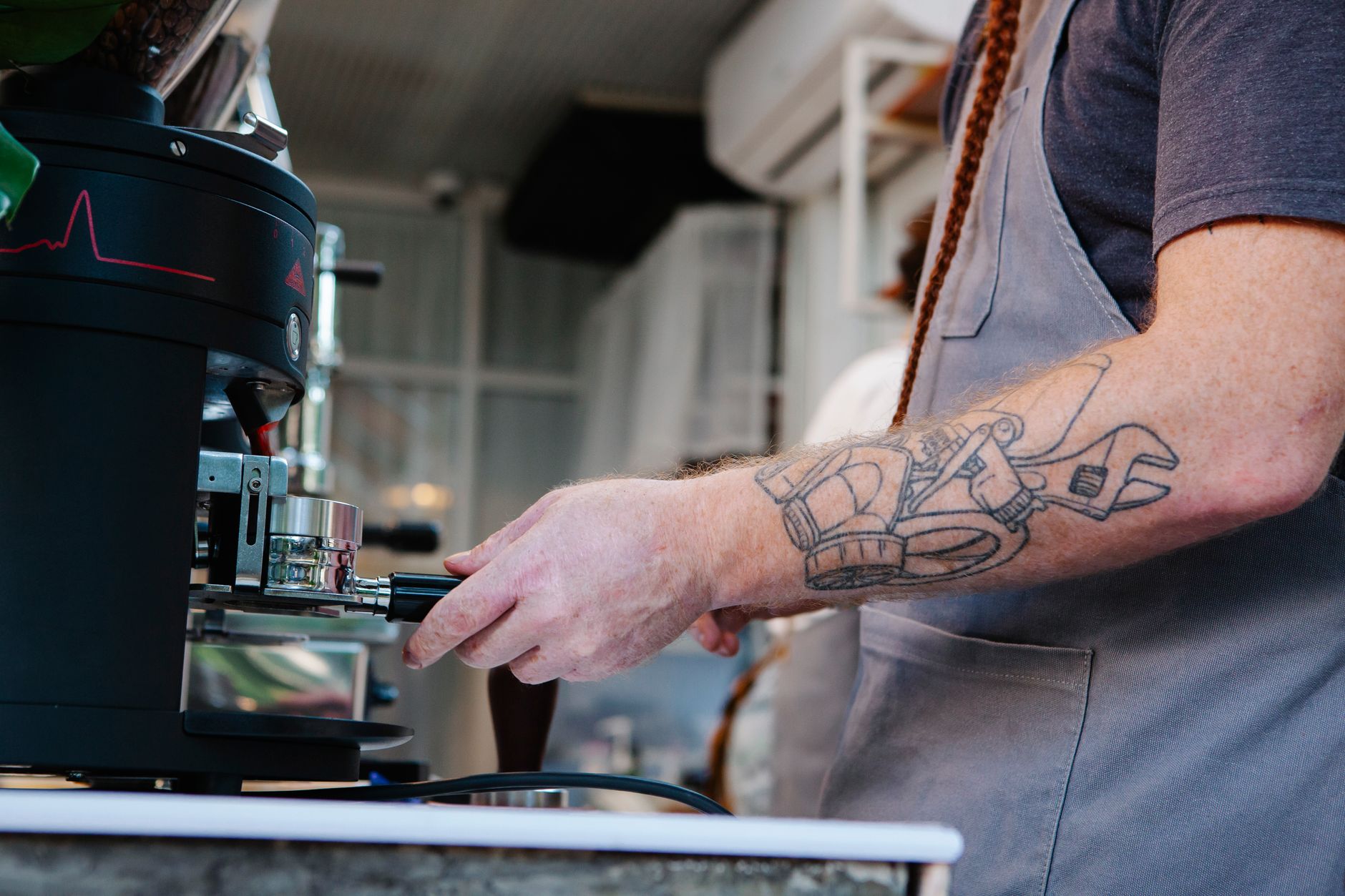
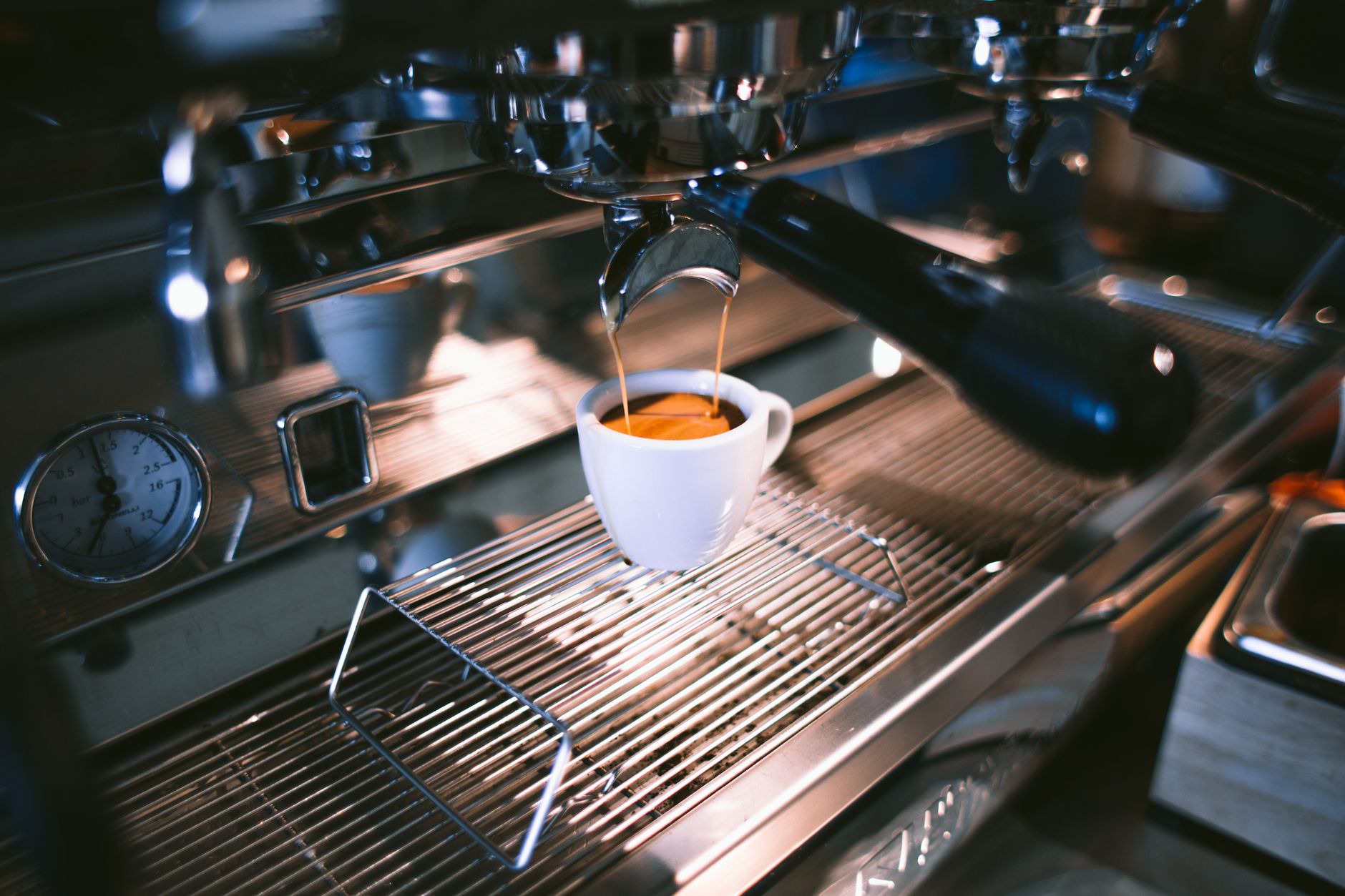 Photo: Burst via Pexels
The 9 bar figure comes from decades of empirical work by Italian espresso machine engineers, later validated by the Specialty Coffee Association. At 9 bar, water molecules are forced through a finely ground, compacted coffee bed at a rate that maximizes soluble extraction while preserving volatile aromatics.
What gets confusing is the difference between pump pressure and brew pressure. Your pump might generate 15 bar, but after the solenoid valve, the OPV (over-pressure valve), the portafilter basket, and the puck itself, you might be seeing 7 or 11 bar at the actual extraction point. The number on a machine’s spec sheet is almost never the brew pressure.
How Espresso Pump Pressure Works
Direct Answer: Most home espresso machines use a vibration pump (vibratory pump) rated at 15 bar. An OPV bleeds off excess pressure to hold brew pressure at 9 bar. Without this regulation, over-pressure forces channeling — water cuts paths of least resistance through the puck instead of percolating evenly.
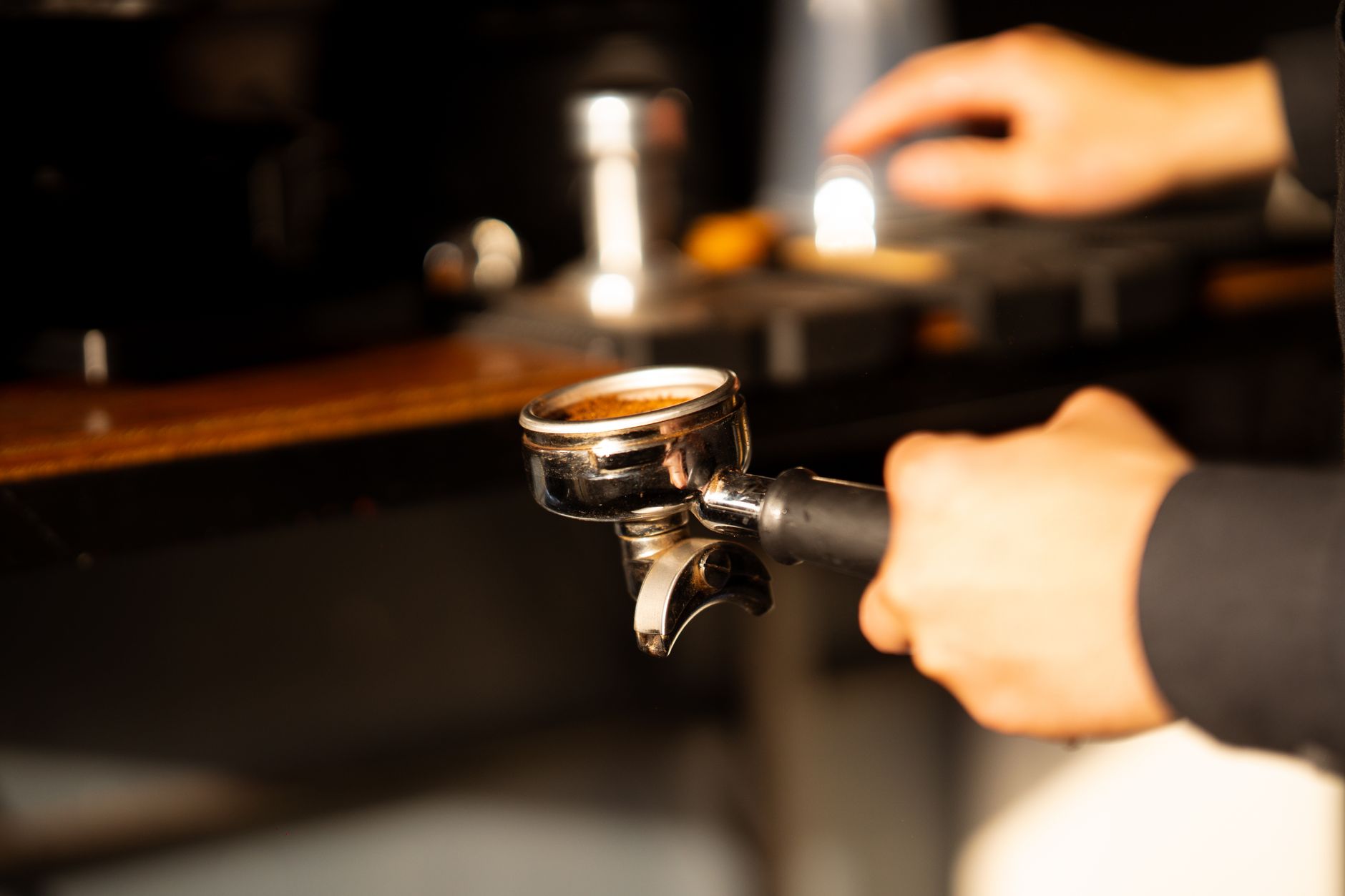
 Photo: Jean-Paul Wettstein via Pexels
Vibration Pumps vs. Rotary Pumps
| Feature | Vibratory Pump | Rotary Pump |
|---|---|---|
| Mechanism | Electromagnetic oscillation | Motor-driven impeller |
| Max pressure | 15–19 bar | 8–12 bar |
| Noise level | Loud (buzzing) | Near-silent |
| Typical use | Home machines | Commercial, prosumer |
| Adjustability | Via OPV screw | Built-in pressure control |
| Price tier | Budget–midrange | Midrange–high-end |
Rotary pumps are quieter and produce steadier pressure, which is why commercial machines use them. The low-frequency hum of a La Marzocca versus the rattle of a budget pump is entirely down to pump type.
The OPV’s Job
The over-pressure valve is a spring-loaded bypass. When pump pressure exceeds the spring tension, water reroutes back to the reservoir. Adjusting the OPV spring — tighter raises brew pressure, looser lowers it — is the correct way to calibrate your machine. You need a pressure gauge (usually via a portafilter-mounted gauge adapter) to do this accurately.
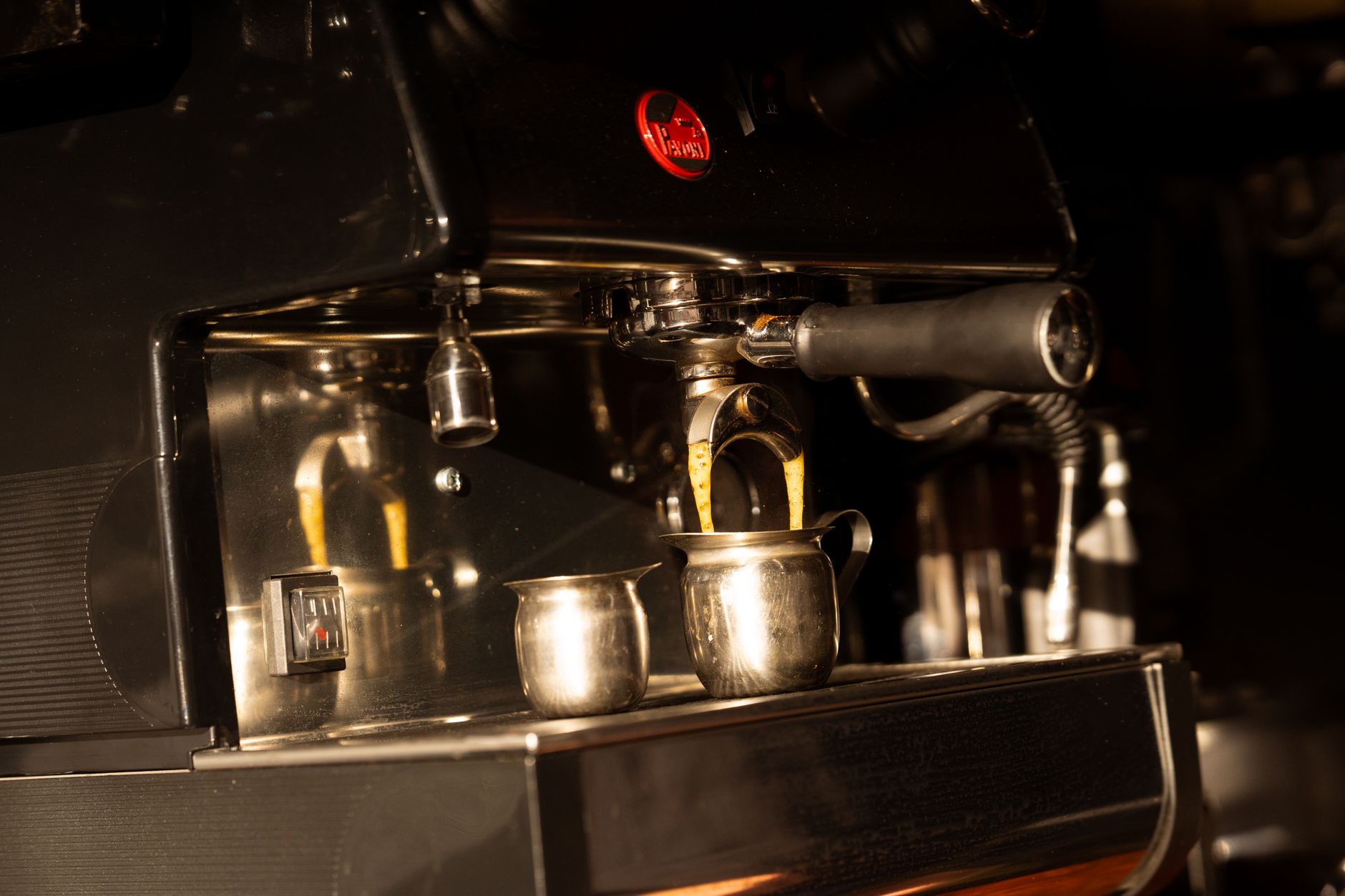
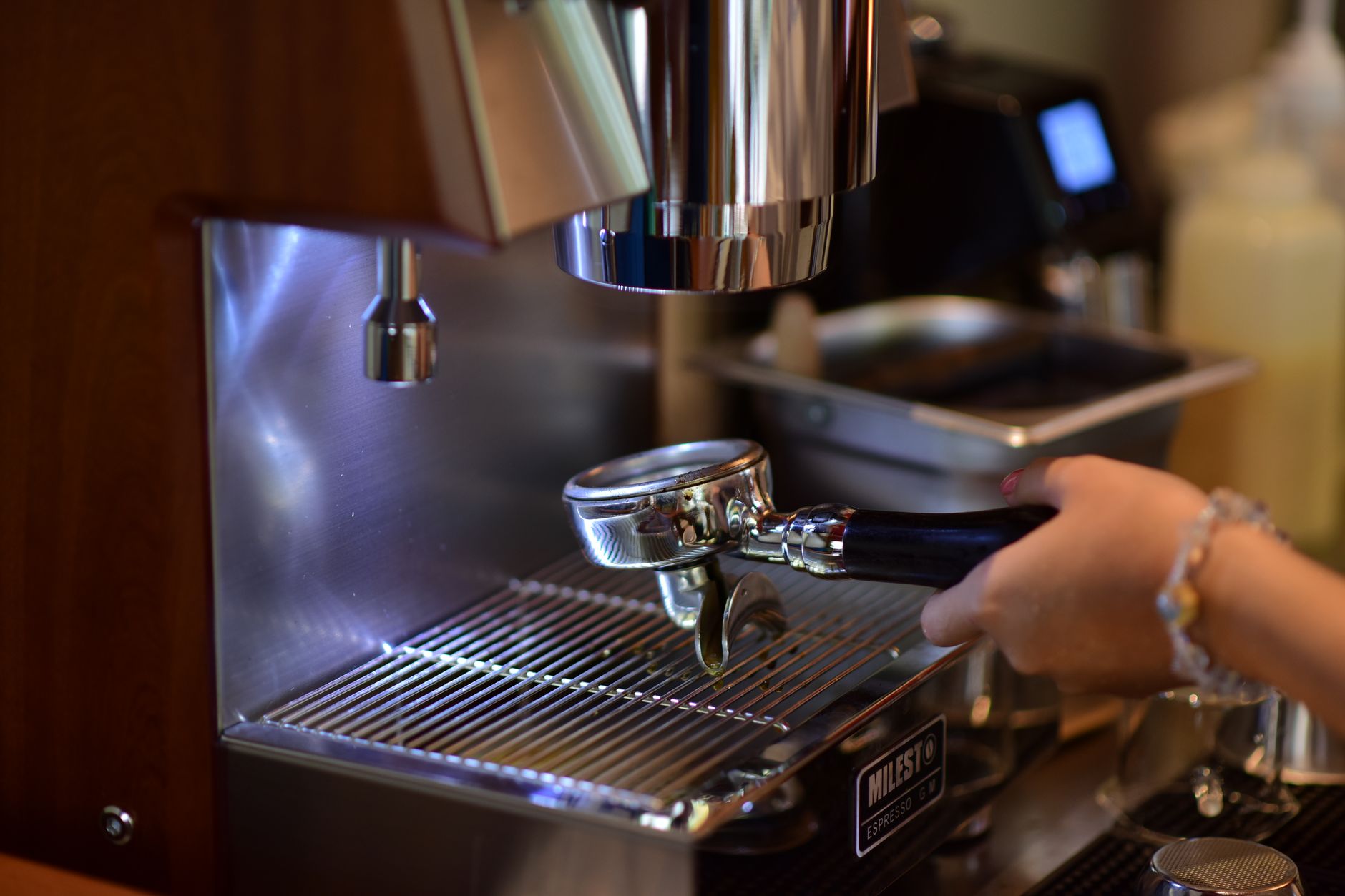 Photo: Sóc Năng Động via Pexels
Why 9 Bar? The Physics Behind the Number
Direct Answer: 9 bar produces the right balance of extraction yield (18–22% TDS) and extraction time (25–30 seconds for a 1:2 ratio) for standard espresso parameters. Lower pressure under-extracts; higher pressure over-extracts and physically damages the puck structure through channeling.
Water at 9 bar and 93°C has a specific solubility profile for coffee solids — acids, sugars, lipids, and Maillard compounds. Drop to 6 bar and you pull sour, thin shots. Push to 12 bar and bitterness climbs as harsh phenolic compounds dissolve more rapidly than at the optimal rate.
Some roasters and baristas experiment with lower-pressure profiles (6–7 bar) for lighter roasts, where softer cell structures extract easily without needing high pressure. This requires a machine with genuine pressure profiling capability — not just a dial — such as the Breville Barista Touch or the Decent Espresso DE1 .
Pressure Profiling: Beyond the 9 Bar Default
Modern prosumer machines can ramp pressure throughout a shot. A typical profiling sequence:
- Pre-infusion (1–4 bar, 5–8 seconds): Saturates the puck evenly, reduces channeling risk
- Ramp up (4→9 bar, 3–5 seconds): Builds to full extraction pressure
- Extraction (9 bar, 20–25 seconds): Main shot body
- Ramp down (9→6 bar, 5 seconds): Preserves clarity in the finish
This is not necessary for a great shot, but it’s useful for difficult beans or inconsistent puck prep.
What Pressure Should My Home Espresso Machine Be Set To?
Direct Answer: 9 bar at the group head during extraction. The pump pressure rating on the spec sheet (usually 15 bar) is not the brew pressure — it’s the maximum the pump can produce before the OPV bleeds it off. The table below shows stock pump pressure, effective brew pressure, and whether the OPV is user-adjustable for the most common home machines.
| Machine | Pump Pressure | Effective Brew Pressure (stock) | OPV User-Adjustable? |
|---|---|---|---|
| Gaggia Classic Pro | 15 bar | ~9 bar | Yes (factory set to 9, easy to verify) |
| Breville Barista Express (ES1) | 15 bar | ~9 bar (PID + OPV) | Limited (internal only) |
| De’Longhi Dedica (EC685) | 15 bar | 11–14 bar (over-pressured stock) | Yes, with $20 spring kit |
| Rancilio Silvia | 15 bar | ~9 bar | Yes |
| Breville Bambino Plus | 15 bar | ~9 bar | No (sealed) |
| Nespresso Vertuo | centrifusion (up to 19 bar) | Variable by pod barcode | No |
| DeLonghi La Specialista | 15 bar | ~9 bar | No (internal) |
Important: The De’Longhi Dedica is one of the most popular beginner machines and ships over-pressured from the factory. A stock Dedica runs 11–14 bar at the puck. Replacing the OPV spring with a 9-bar replacement (~$20 on Amazon) is a documented 10-minute fix that immediately improves shot quality — less bitterness, tighter crema.
Checking and Adjusting Your Machine’s Brew Pressure
Direct Answer: Buy a blind portafilter adapter and a pressure gauge. Run the pump with no basket inserted to read peak pump pressure, then dial the OPV until brew pressure holds at 8.5–9.5 bar during a real extraction with a properly dosed basket.
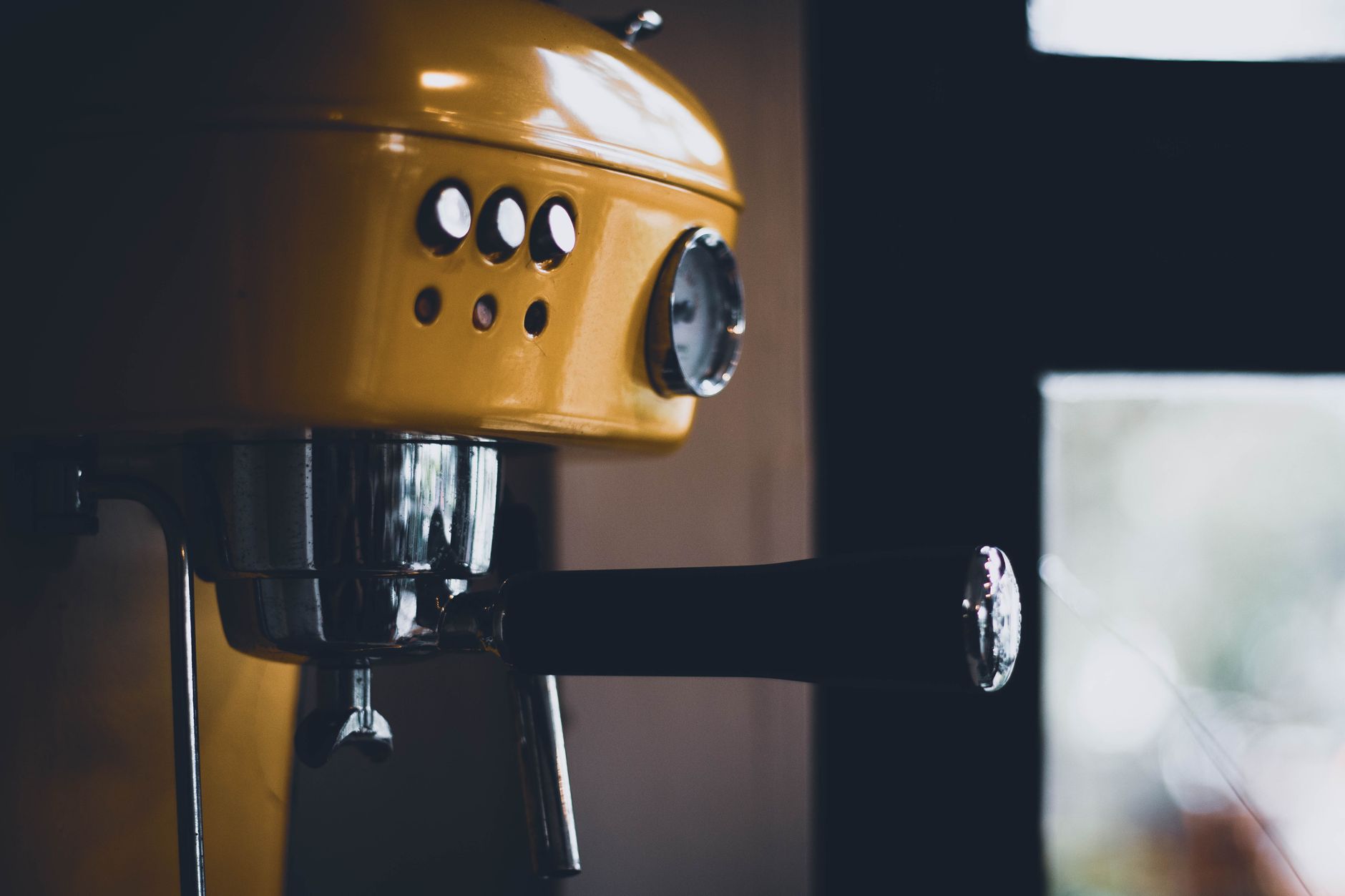
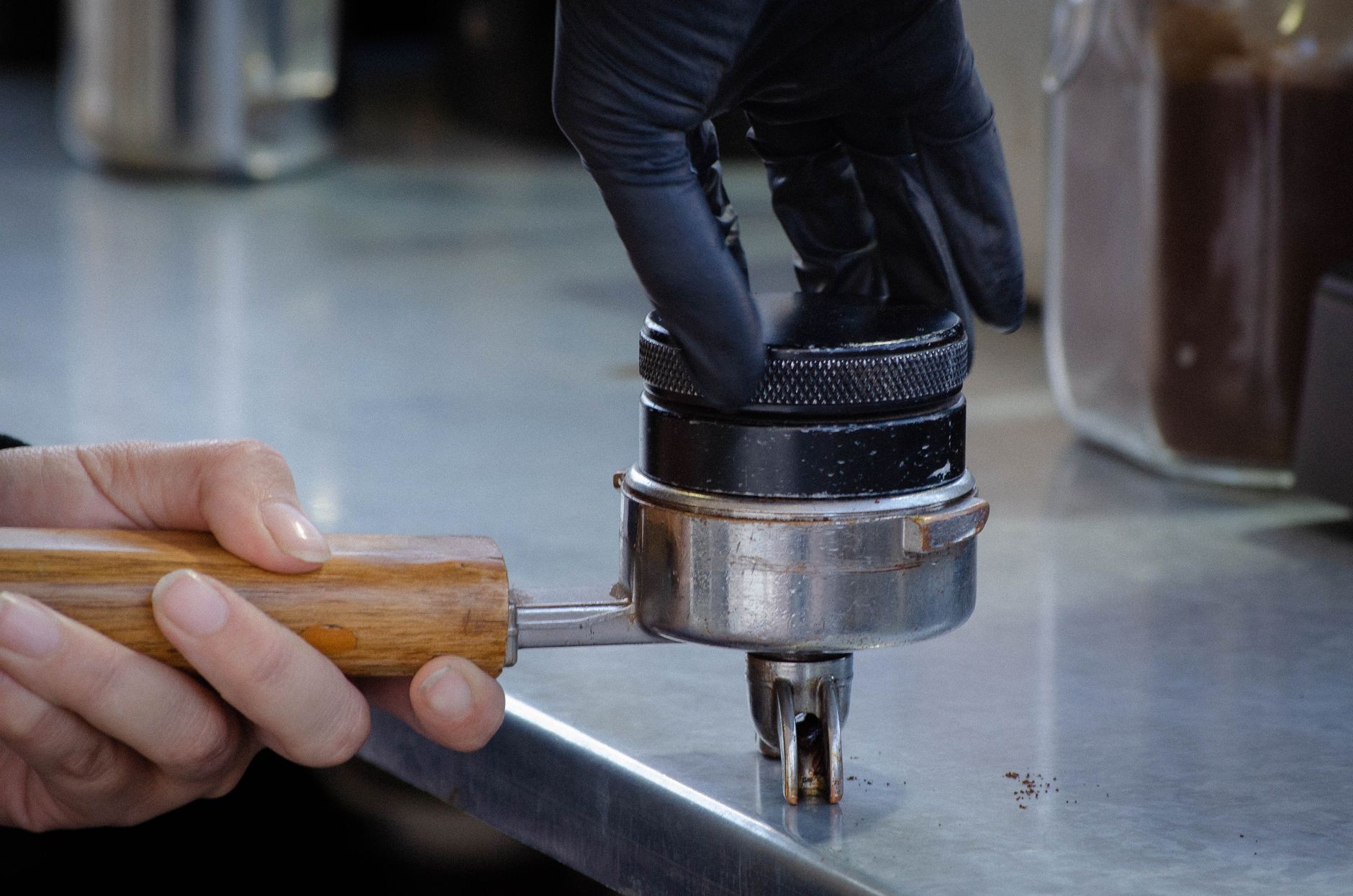 Photo: Fernanda Mancillas (coco) via Pexels
Step-by-Step OPV Adjustment
- Purchase a portafilter pressure gauge kit (~$20–35) sized for your machine’s portafilter diameter
- Run a blank shot (no coffee) to measure pump pressure baseline
- Tamp a full dose of ground coffee and run a shot — read brew pressure at peak flow
- Locate the OPV (usually accessible by removing the top panel or under the drip tray)
- Adjust clockwise to increase pressure, counterclockwise to decrease
- Repeat until you read 9 bar during extraction, not at the pump
Most budget machines ship at 11–14 bar brew pressure. Lowering to 9 bar will immediately improve shot texture — less bitterness, better crema structure.
Breville Barista Express (ES1) Brew Pressure
The Breville Barista Express (model ES1) ships from the factory with its OPV set to approximately 9 bar — it is one of the few consumer machines that ships at the correct brew pressure by default. However, individual units vary. To verify your specific ES1:
- Fill the portafilter with a standard 18g dose and tamp firmly
- Attach a portafilter pressure gauge (54mm — matches the Barista Express basket size)
- Run a shot and watch the gauge: you should see pressure rise to 8.5–9.5 bar and hold during the middle of extraction
- If you’re reading above 10 bar, the OPV needs adjustment — access it by removing the top panel (one screw, no tools required beyond a Phillips head)
The internal pressure gauge visible on the Barista Express front panel reads pump pressure, not brew pressure — ignore it for this test. Only an external portafilter gauge gives you the actual pressure at the puck.
→ See Also
- The Complete Guide to Espresso Machines (2026)
- Best Espresso Machine Under $200 (2026)
- Best Espresso Machine Under $500 (2026)
FAQ
Does higher pump pressure mean better espresso? No. Pump pressure above 9 bar at the group head causes over-extraction and channeling. Most machines are factory-set high to guarantee flow through tight pucks and worn baskets — if yours is calibrated correctly at 9 bar, “more pressure” does nothing useful.
What’s the difference between pump pressure and bar rating in specs? The bar rating in specs is pump output, not brew pressure. A 15-bar pump with a properly set OPV delivers 9 bar at the puck. Manufacturers advertise pump pressure because it’s a bigger number, not because it reflects extraction quality.
Can I adjust the pressure on any home espresso machine? Most machines with a vibratory pump have an accessible OPV and can be adjusted with basic tools. Some budget single-boiler machines seal the OPV inside, making adjustment difficult without disassembly. Check whether your model has a user-accessible OPV before purchasing if this matters to you.
Why does my espresso taste bitter even with fresh beans? Over-pressure is one common cause — if your machine runs above 10 bar brew pressure, dial back the OPV. Other culprits are grind too fine, dose too high, water too hot, or extraction time too long. Address pressure first since it’s the most commonly miscalibrated variable.
Does pre-infusion affect the required brew pressure? Pre-infusion reduces the pressure spike at the start of extraction, which lowers channeling risk in dry or uneven pucks. The target brew pressure during the main extraction phase stays at 9 bar — pre-infusion is a ramp-up to that target, not a substitute for it.
Editorial methodology: Assessments are based on manufacturer specifications, published user reviews, and editorial research. Physical hands-on testing is noted explicitly where it occurred. Rankings reflect our editorial judgment and are not influenced by affiliate commission rates. Full editorial policy · Affiliate disclosure