Contents
Flat Burr vs Conical Burr Grinder: What’s the Difference?
TL;DR: Flat burrs produce a more uniform grind particle distribution, which typically means brighter, more defined espresso flavor. Conical burrs run quieter, retain less coffee, and cost less at the same quality tier. For most home baristas, a quality conical burr grinder is the better value — flat burrs shine when flavor precision matters most.
| Flat Burr | Conical Burr | |
|---|---|---|
| Best for | Espresso, light roast clarity | Filter, pour-over, general use |
| Value inflection | $400+ (DF64, Lagom) | Under $300 (Niche Zero, Encore) |
| Noise | Louder | Quieter |
| Retention | Higher | Lower |
| Verdict | Buy if espresso precision matters | Buy for most home setups |
What Are Flat Burr and Conical Burr Grinders?
Both flat and conical burrs crush coffee beans between two abrasive surfaces, but the geometry differs fundamentally. Flat burrs use two parallel rings facing each other; conical burrs use a cone-shaped center piece inside a ring. That geometry difference drives everything downstream — particle distribution, heat generation, grind retention, and ultimately cup flavor.
 Photo: aidin gheshlaghi via Pexels
Flat burrs sit horizontally (or vertically in some commercial designs), with beans falling through a gap between two opposing rings. Conical burrs orient the cone point-up, with beans fed down from the top and ground as they travel between the cone and the outer ring.
Both designs show up across the full price spectrum, from $50 blade-adjacent budget grinders to $3,000 professional workhorses. The burr type is one variable among many — burr diameter, motor quality, and build tolerance matter just as much.
What Is a Conical Burr Grinder?
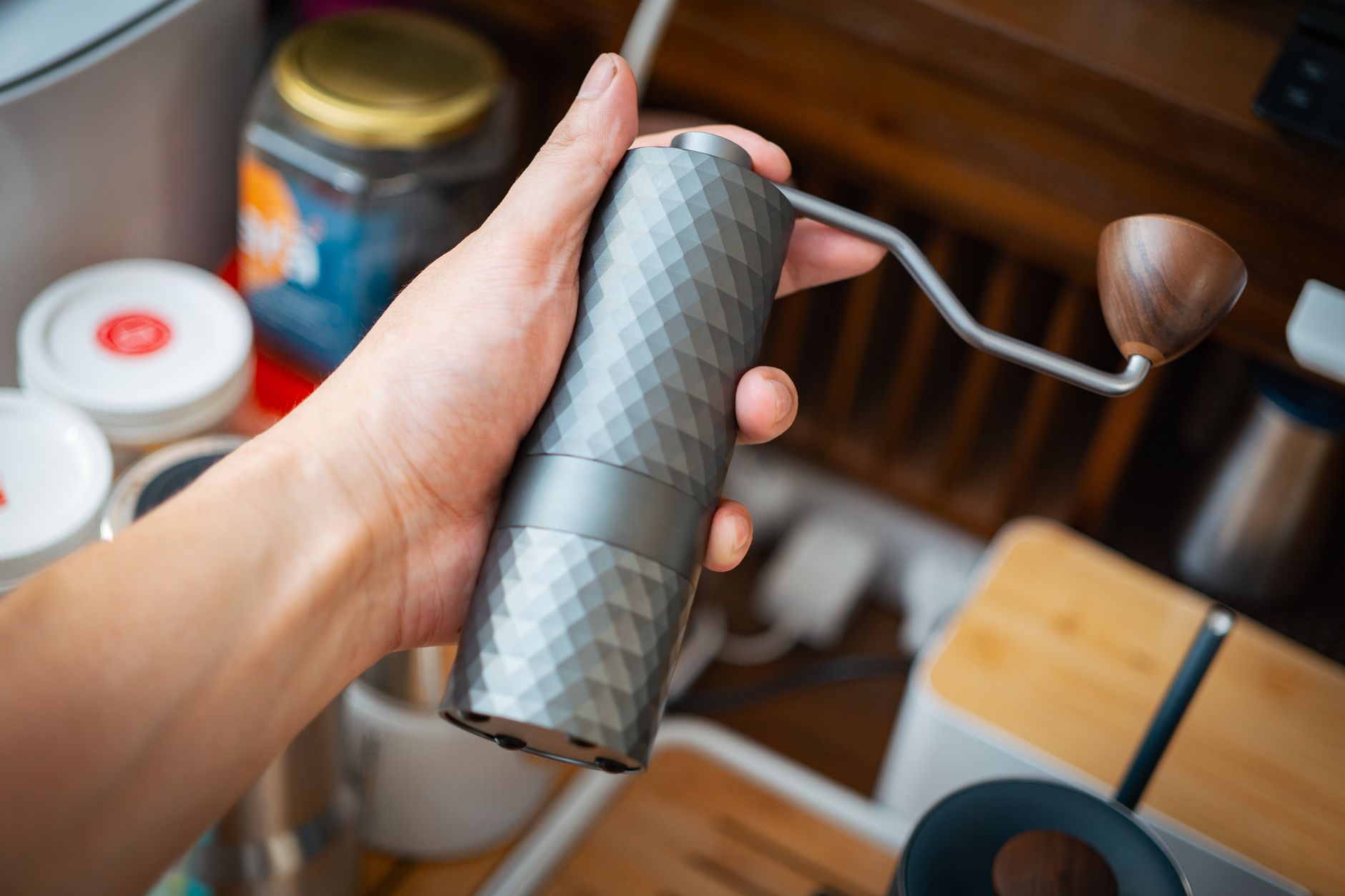
A conical burr grinder uses a cone-shaped burr that spins inside a matching ring-shaped burr. Beans fall in from the top and are crushed progressively finer as they travel down the narrowing gap between the cone and the ring. It’s the most common burr type in home grinders — from the $50 entry level to the $1,100 Mazzer Philos — because it runs quieter, cooler, and with lower retention than a comparable flat burr.
Conical burrs produce a slightly bimodal grind (two clustered particle sizes), which many tasters find adds body and forgiveness — a plus for pour-over and everyday espresso. If you want the fuller, rounder cup and a quieter machine, conical is the default choice; flat burrs (below) trade that for clarity.
What Is a Flat Burr Grinder?
A flat burr grinder uses two parallel rings facing each other — beans drop through the center and are ground as they pass between the two opposing flat surfaces before exiting radially. Flat burrs are the preferred design in high-end espresso grinders (DF64, Lagom P64, Mahlkönig E65S) because the horizontal geometry produces a tighter, more uniform particle size distribution.
The tradeoff: flat burrs run hotter, louder, and retain more coffee in the exit path. They’re also more expensive at equivalent quality. Below ~$300, conical burrs outperform flat burrs in practice because build tolerance and motor quality matter more than burr geometry at that price.
Grind Particle Distribution: Where Flat Burrs Have the Edge
Flat burrs tend to produce a narrower particle size distribution — more grounds clustered around the target size, fewer fines and boulders. This translates to more even extraction, which most tasters perceive as cleaner, brighter, more defined flavor. Conical burrs produce a bimodal distribution (two size clusters), which some argue adds body and complexity.
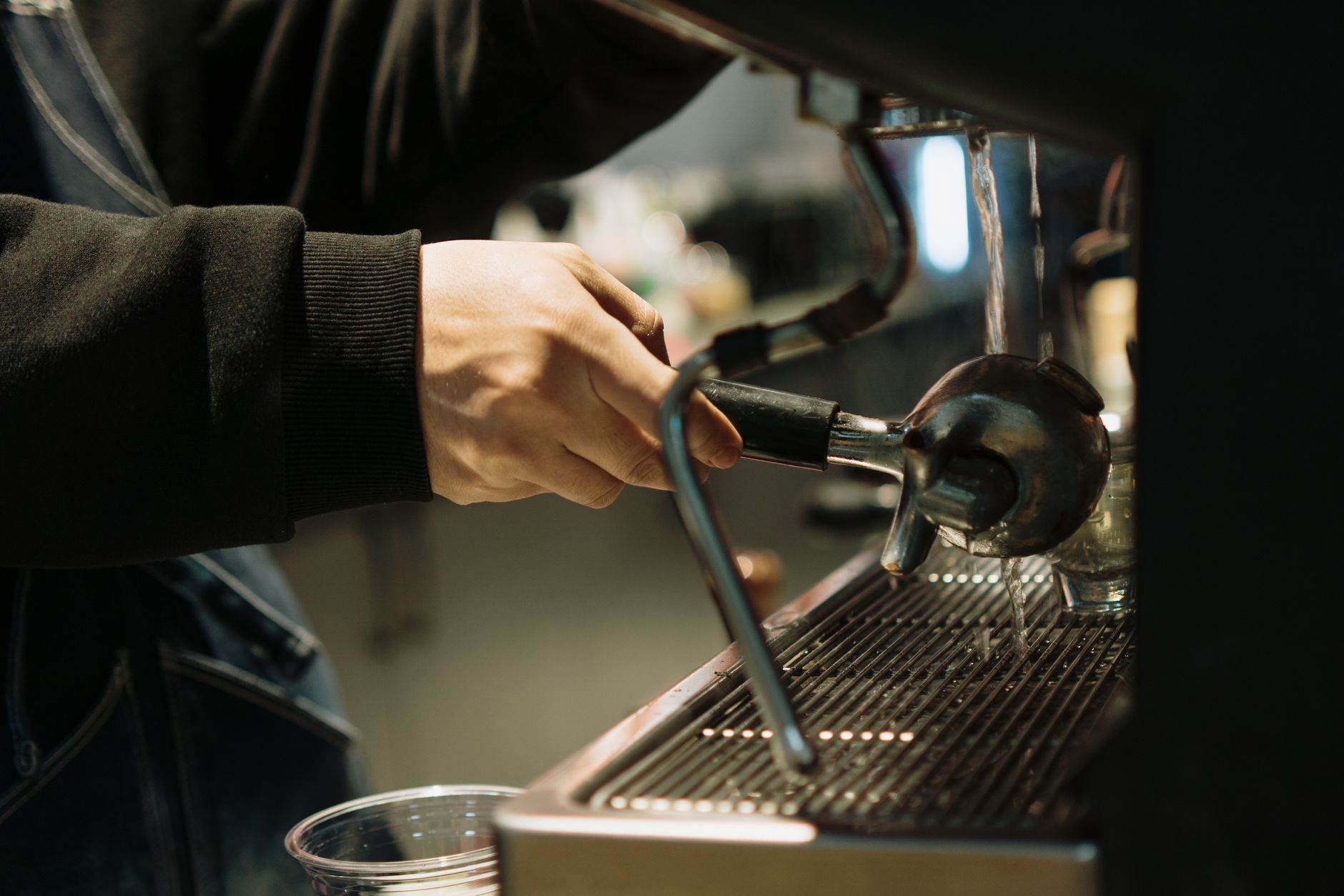 Photo: Berna via Pexels
The “bimodal” thing is real but often overstated in forum debates. At a given price point, a well-engineered conical burr grinder can produce excellent, even extractions. The distribution advantage of flat burrs becomes meaningfully apparent in blind cuppings only at the upper-mid to high end ($300+).
For filter coffee (pour-over, Chemex, batch brew), the difference is smaller. Flat burrs still score slightly higher in clarity tests, but a quality conical like the Baratza Encore
Grind Retention and Workflow
Conical burrs win on retention. Their geometry creates less static and holds less ground coffee between the burrs and the exit chute. Flat burr grinders, especially high-RPM designs, accumulate more grounds internally — a real problem when switching between espresso and filter, or when dosing by weight.
 Photo: aidin gheshlaghi via Pexels
Retention matters practically in two scenarios:
- Weight-based dosing: If you grind-by-weight (e.g., target 18g out), retained grounds from previous shots throw off your actual dose.
- Multiple brew methods: Purging 1–3g of stale grounds between uses wastes coffee and adds steps.
Low-retention flat burr grinders exist — the Lagom P64 and Weber EG-1 are engineered specifically around this — but they cost significantly more than their conical counterparts.
Noise and Heat
Conical burrs run quieter and cooler. Their lower RPM grinds at roughly 400–600 RPM versus flat burrs at 1,000–1,500 RPM in many designs. Lower speed means less friction heat — relevant for high-volume grinding where heat can alter volatile aromatics before brewing.
For home use (one or two shots, maybe a small batch brew), heat buildup is essentially a non-issue. Café operators grinding dozens of kilograms per day will notice it; home baristas won’t.
The noise gap is real. A conical grinder like the Niche Zero
Price and Value by Tier
| Price Tier | Best Conical Option | Best Flat Burr Option | Winner on Value |
|---|---|---|---|
| Under $100 | Baratza Encore | Baratza Encore ESP | Conical |
| $100–$300 | Comandante C40 (manual) | DF64 Gen 2 | Toss-up |
| $300–$600 | Niche Zero | Eureka Mignon Specialita |
At the under-$300 range, conical burrs consistently offer more grinder-per-dollar. The flat burr value inflection point starts around $400–600.
Espresso vs. Filter: Does the Choice Change?
For espresso, the flat burr advantage in particle uniformity is most noticeable — tight espresso parameters amplify any distribution inconsistency. For filter brewing, the difference is smaller and conical burrs are a strong, often superior value choice.
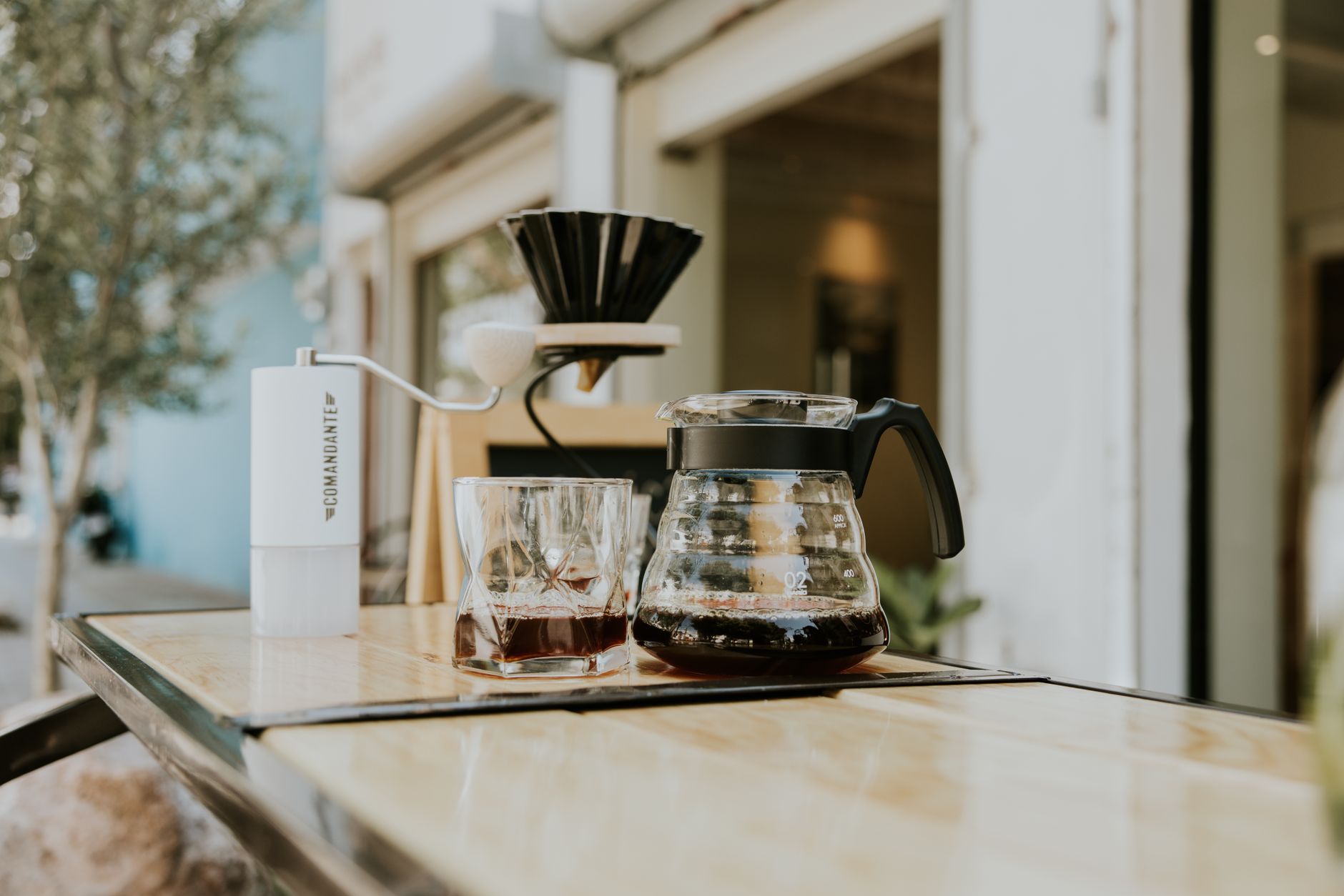 Photo: Amar Preciado via Pexels
Espresso is an unforgiving method. Variables interact multiplicatively: grind distribution unevenness leads to channeling, which leads to sour/bitter imbalance in the cup. This is why flat burrs dominate commercial espresso — the Mahlkönig E65S, La Marzocco Swift, every high-end commercial spec sheet reaches for flat geometry.
Pour-over specialists, however, often prefer conical. The slight bimodal distribution can add texture and body to a naturally sweet Ethiopian natural process that might otherwise taste thin.
→ See also
- The Complete Coffee Grinder Guide (2026)
- Burr vs Blade Grinder: Why It Matters for Your Coffee
- Best Coffee Grinders Under $100 (2026)
FAQ
Is a flat burr grinder better than conical? Not categorically — it depends on budget and use case. Flat burrs produce more uniform particle distribution, which tends to mean cleaner espresso flavor at the same quality tier. But a $400 conical will outperform a $150 flat burr grinder in almost every measurable way.
Do conical burr grinders wear out faster? No — conical burrs typically last longer than flat burrs at equivalent quality levels. The lower RPM operation reduces wear, and the geometry is more forgiving of harder beans. Most quality conical burrs (steel, not ceramic) last 500–1,000+ kg before needing replacement.
Why do most commercial espresso bars use flat burrs? High-volume commercial environments prioritize throughput and consistency across hundreds of shots. At commercial quality tiers ($1,000+ grinder bodies), flat burrs measurably produce more uniform distribution, and the heat and retention issues are managed through engineering rather than geometry.
Can I use a conical burr grinder for espresso? Absolutely. The Niche Zero, Mazzer Mini E, and many other conical grinders are widely used by serious home espresso enthusiasts and small cafés. The bimodal distribution doesn’t prevent excellent espresso — it just performs slightly differently than a flat burr, often requiring a finer target grind size.
What’s grind retention and why does it matter? Retention is the amount of ground coffee that stays inside the grinder after grinding. Most grinders retain 0.5–3g. For a home barista dosing 18g for espresso, even 1g of retention means your actual dose may be 1g short — or 1g of stale grounds from the previous session. Lower retention matters most for weight-based dosing and for baristas who switch between multiple brew methods.
Does burr material matter more than shape? For most buyers: yes. Steel burrs (hardened stainless or coated steel) outperform ceramic at equivalent price points. Ceramic is quieter and runs cool but is more brittle and less precise. Don’t sacrifice burr quality to get flat geometry — a quality conical steel burr beats a cheap flat burr every time.
Editorial methodology: Assessments are based on manufacturer specifications, published user reviews, and editorial research. Physical hands-on testing is noted explicitly where it occurred. Rankings reflect our editorial judgment and are not influenced by affiliate commission rates. Full editorial policy · Affiliate disclosure