Contents
Fresh Roast SR800 Review: Is It Still Worth It in 2026?
TL;DR: The Fresh Roast SR800 is the best fluid-bed home roaster under $200 for anyone who wants real control without a steep learning curve. It roasts 4–8oz batches in 8–15 minutes, handles light through dark profiles, and gives you enough manual override to develop genuine roasting skill. If you’re serious about home roasting, this machine earns its place.
What Is the Fresh Roast SR800?
The SR800 is a convection (fluid-bed) home coffee roaster that uses a column of hot forced air to roast 4–8oz green coffee in one shot. It replaced the SR540 with a larger drum-equivalent chamber, a more powerful heating element, and a longer chaff collector — all while staying under $200. It’s the dominant entry-level recommendation for a reason: nothing else in this price range matches its control set.
 Photo: Jakub Zerdzicki via Pexels
Fresh Roast’s lineup sits above the SR540 and below the SR800EXT (the extended-chamber version). The SR800 itself ships with a glass roasting chamber, a chaff collector, and a power adapter — no software required, no Bluetooth, no subscription. The interface is three knobs and a display. That simplicity is a feature.
Fluid-bed roasting differs from drum roasting (like the Behmor or Hottop) in one key way: the beans are suspended in moving hot air, not tumbled against a rotating metal surface. This produces a faster roast, cleaner cup, and more even development on smaller batch sizes — but it also means you lose some of the body and caramelization complexity you’d get from longer drum contact.
SR800 Specs and Key Controls
The SR800 runs nine fan speed settings and nine heat settings independently, with a built-in timer and temperature readout. That combination — independent fan and heat control — is what separates it from cheaper fluid-bed machines that only let you toggle a single heat level.
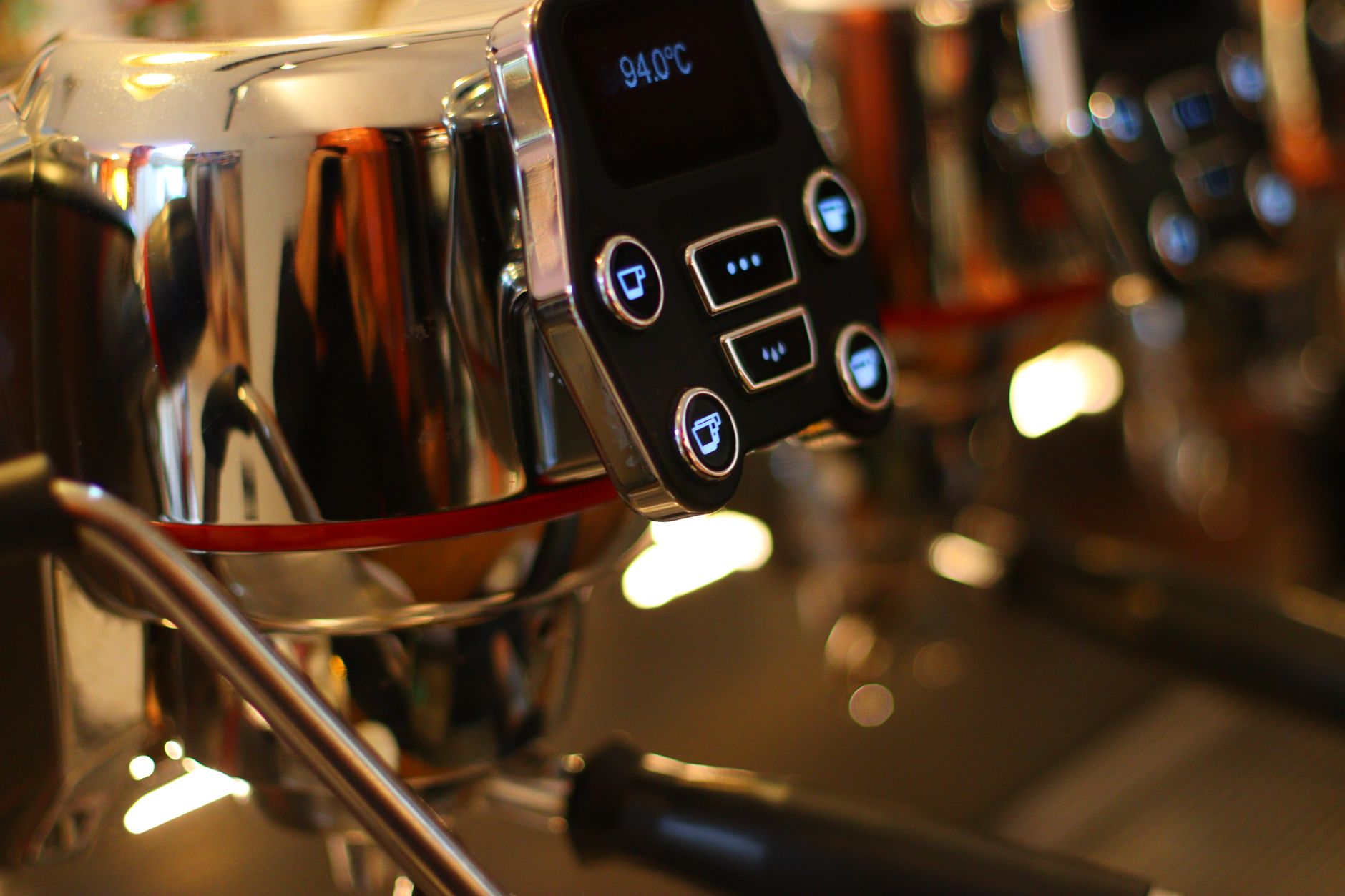 Photo: Efe Burak Baydar via Pexels
| Spec | Value |
|---|---|
| Batch size | 4–8oz (115–230g) green |
| Roast time | 8–15 minutes typical |
| Max temp (display) | ~500°F / 260°C |
| Fan speeds | 9 |
| Heat levels | 9 |
| Chaff collection | External glass collector |
| Cooling cycle | Automatic (fan-only) |
| Voltage | 120V (US model); 220V available |
| Weight | 2.2 lbs |
The temperature readout shows exhaust air temp, not bean mass temp — an important caveat. The displayed number runs 40–70°F cooler than actual bean surface temperature, so roast by color, sound (first and second crack), and time rather than treating the display as a thermocouple reading.
Independent fan control is the SR800’s real differentiator. Dropping fan speed during the Maillard phase slows development for sweeter, more complex results. Bumping fan up before first crack manages the exothermic spike. These aren’t features you’ll use on day one, but they’re there when you’re ready.
Roast Quality: What to Expect in the Cup
Light roasts are where the SR800 excels. The fast, clean heat profile preserves origin character — floral, fruit, and bright acidity — better than comparably priced drum roasters. Medium roasts are equally achievable. Full dark roasts are possible but require careful fan management to avoid scorching the outside before the center develops.
 Photo: Ubeydulah Beşir KÖROĞLU via Pexels
For a typical Ethiopian natural at a City+ roast:
- Dry phase (room temp → 300°F): ~3 min, fan 7–9, heat 7
- Browning (300°F → first crack warning): ~4 min, fan 5–6, heat 7–8
- Development (first crack → dump): ~1.5–2.5 min, fan 7, heat 6
These are starting points, not recipes. Density, moisture content, and age of the green all shift these numbers. Write down every roast — batch weight, settings by minute, first crack time, dump temp, final weight — from session one.
One honest limitation: the SR800 runs hot and fast compared to commercial drum profiles. The roast curve is more linear than an S-curve, which means some coffees can taste baked if you push too slow or underdeveloped if you go too fast. With practice, you work around it. With a Artisan or RoastLogger USB probe setup, you can map the curve exactly — the SR800 supports aftermarket thermocouple probes through the chaff collector port on some mods, though this is DIY territory.
SR800 vs. Competing Entry-Level Roasters
Versus the Behmor 1600AB, the SR800 costs less, roasts faster, and produces cleaner light-to-medium cups. The Behmor wins on batch size (up to 1lb) and smoke suppression for darker roasts. Versus the Sandbox Smart R1, the SR800 is cheaper and simpler; the R1 adds Bluetooth app control and a more sophisticated heat profile but costs 3–4× more.
| Roaster | Price | Batch Size | Control | Best For |
|---|---|---|---|---|
| Fresh Roast SR800 | ~$200 | 4–8oz | Manual (fan + heat) | Light/medium, beginners–intermediate |
| Fresh Roast SR800EXT | ~$260 | 6–10oz | Manual (fan + heat) | Same, larger batches |
| Behmor 1600AB | ~$350 | 4–16oz | Semi-auto profiles | Medium/dark, larger households |
| Sandbox Smart R1 | ~$700–800 | 3.5–5.3oz | App + auto profiles | Tech-forward, light specialty |
| Gene Café CBR-101 | ~$500 | 8oz | Manual drum | Balanced drum profile, medium |
The SR800EXT is worth the $60 premium if you regularly roast for two or more people. The larger chamber reduces the risk of tipping (beans escaping the chamber at high fan speeds) and gives more thermal mass for consistent development.
Who Should Buy the SR800 — and Who Shouldn’t
Buy it if you’re moving off grocery store beans, want to source direct from importers like Sweet Maria’s or Genuine Origin, and want a machine that teaches you roasting fundamentals without a $500+ commitment. Skip it if you primarily roast dark, need 12oz+ batches, or want smoke suppression for indoor apartment use.
 Photo: Alexas Fotos via Pexels
The SR800 produces a moderate amount of smoke at City+ and beyond. Outdoors or under a strong range hood is ideal. In a well-ventilated kitchen it’s manageable for light-to-medium work; for repeated dark roasts, look at the Behmor or a drum roaster with a smoke suppressor.
Chaff management is real. Empty the collector every 1–2 roasts. Chaff is a fire risk if it accumulates around the heating element — don’t skip this step.
The SR800 also has a strong resale market. If you outgrow it for a Bullet R1 or Kaffelogic Nano 7, you’ll recover $100–140 easily. It’s a low-risk entry point with a clear upgrade path.
Beans & Origins: What Roasts Best in the SR800
The SR800’s fast, clean heat profile suits washed and natural Ethiopians, Kenyan AA, and light-density Colombians exceptionally well. Dense, high-altitude greens (Guatemala Huehuetenango, Yemen Mokha) need lower fan speed in the Maillard phase to develop fully without rushing.
| Origin | Altitude (MASL) | Processing | Best Roast Level | Tasting Notes |
|---|---|---|---|---|
| Ethiopia Yirgacheffe | 1800–2200 | Washed | City–City+ | Jasmine, bergamot, lemon |
| Ethiopia Sidama | 1700–2200 | Natural | City+ | Blueberry, dark chocolate, wine |
| Kenya AA | 1700–2100 | Washed | City–Full City | Blackcurrant, tomato, bright acid |
| Colombia Huila | 1600–2000 | Washed | City+–Full City | Caramel, red apple, milk choc |
| Guatemala Huehuetenango | 1500–2000 | Washed | Full City | Brown sugar, peach, hazelnut |
| Brazil Cerrado | 800–1200 | Natural/Pulped | Full City–Vienna | Nutty, low acid, chocolate |
Brew method pairings:
- Washed Ethiopians and Kenyans: V60, Chemex, AeroPress (inverted, 3-min steep)
- Natural Ethiopians: Filter or AeroPress; avoid espresso unless you dial back dose 0.5–1g
- Dense Central Americans: Excellent for espresso; dose standard, lower brew temp 1–2°C
Freshness:
- Degassing: 24–48hrs minimum for filter; 72hrs+ before espresso use
- Storage: Airtight container, room temperature, away from light — avoid the refrigerator
- Shelf life: 2–4 weeks post-roast for peak flavor; drinkable to 6 weeks
→ See also:
- Home Coffee Roasting: The Complete Beginner’s Guide
- Best Home Coffee Roasters (2026 Reviewed)
- How to Roast Coffee Beans at Home: Step-by-Step
FAQ
Is the Fresh Roast SR800 good for beginners? Yes — it’s one of the most beginner-friendly fluid-bed roasters available. The manual fan and heat controls are simple enough to learn quickly, and the short roast time (under 15 minutes) means you get feedback fast. Most people are producing drinkable coffee by their third roast.
What’s the difference between the SR800 and SR800EXT? The SR800EXT has a longer roasting chamber that handles 6–10oz batches versus the SR800’s 4–8oz. The EXT also reduces “tipping” — the phenomenon where beans fly out of the chamber at high fan speeds — because the longer column gives them more room. If your budget allows, the EXT is worth it.
Can the Fresh Roast SR800 roast dark? It can reach Full City+ and Vienna profiles, but full dark (French, Italian) is challenging. The machine’s airflow-driven heat curve doesn’t favor long, slow dark roasts. Expect some unevenness and significant smoke. The Behmor 1600AB is a better choice if dark roasts are your primary target.
How do I know when first crack happens on the SR800? First crack sounds like popcorn popping — a series of sharp, audible snaps. On the SR800, fan noise can mask it at high settings; drop to fan speed 5–6 as you approach 380–400°F on the display to hear it clearly. First crack typically occurs 7–10 minutes into the roast depending on batch size and green density.
Does the SR800 work with Artisan roasting software? Not natively — the SR800 has no USB data output. However, you can add an external thermocouple (Type-K probe) connected to a Phidgets or TC4C board to log bean and exhaust temps in Artisan. This is a popular upgrade among SR800 users who want data-driven roast profiling without buying a new machine.
Editorial methodology: Assessments are based on manufacturer specifications, published user reviews, and editorial research. Physical hands-on testing is noted explicitly where it occurred. Rankings reflect our editorial judgment and are not influenced by affiliate commission rates. Full editorial policy · Affiliate disclosure